Phone:
(701)814-6992
Physical address:
6296 Donnelly Plaza
Ratkeville, Bahamas.
Phone:
(701)814-6992
Physical address:
6296 Donnelly Plaza
Ratkeville, Bahamas.
The smartest backyard spaces conserve water, support local ecosystems, and reduce your home’s footprint. However, you don’t need a full overhaul to get there. A few thoughtful upgrades can transform your yard into something that feels both intentional and alive. Let’s get into what actually makes a difference.
Traditional lawns demand constant watering, mowing, and fertilizing, all for a uniform look that doesn’t give much back. Homeowners are starting to swap out large patches of grass for layered, purposeful greenery. Options such as native ground covers, ornamental grasses, or even clover lawns stay lush with less water and require minimal upkeep. Plus, they bring texture. A yard with variation feels richer, more designed, less like a flat green carpet.
Watering used to be guesswork; now, it’s data-driven. Modern irrigation systems adjust based on weather patterns, soil moisture, and plant type. If it rains, they skip a cycle. If the soil is already damp, they hold back. No wasted water or overwatering. Even better, many systems sync with your phone. Therefore, you can tweak zones, monitor usage, and spot leaks early.
Hardscaping is necessary, but it doesn’t have to fight the environment. Permeable pavers, gravel pathways, and porous concrete allow rainwater to seep into the ground instead of running off into drains. This reduces erosion, prevents pooling, and helps replenish groundwater. It’s one of those upgrades you don’t notice at first, but during heavy rain is when it shines. There are no puddles or runoff issues.
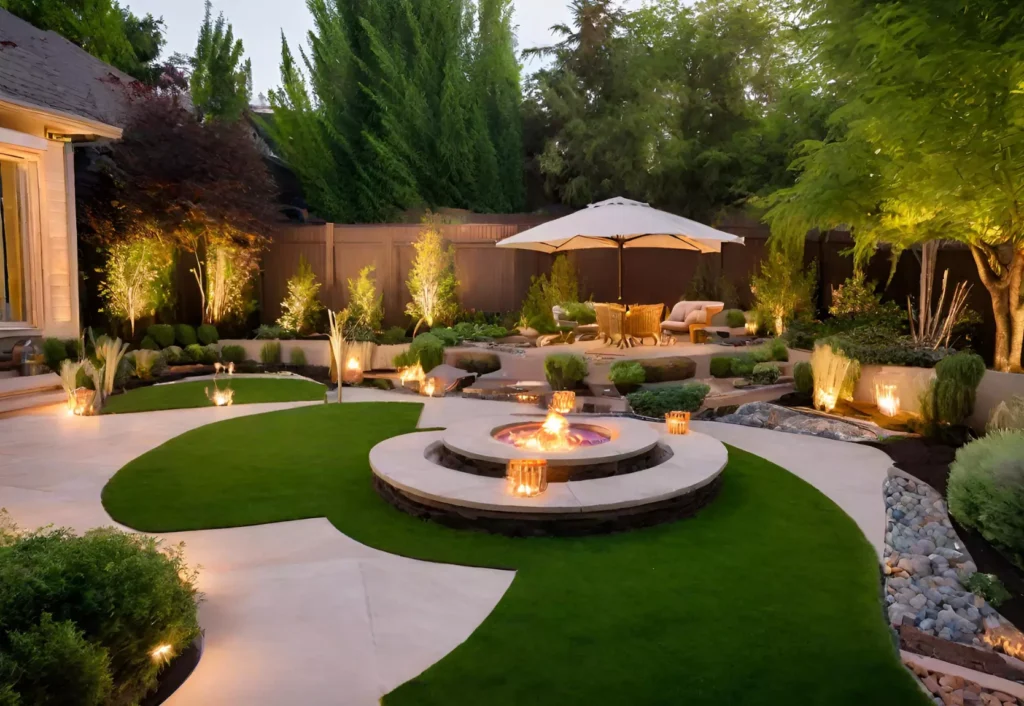
Outdoor lighting can easily tip into overkill. Too bright, too hard, too much. Eco-friendly lighting focuses on subtlety. Sola-powered fixtures line pathways. Low-voltage LEDs highlight key features without flooding the space. Motion sensors reduce unnecessary use. The goal is ambiance, not stadium lighting. A softly lit backyard feels inviting; it draws you outside in the evening instead of pushing you back indoors.
Sustainability doesn’t always come naturally when you’re trying to balance aesthetics, functionality, and long-term impact. That’s where thoughtful landscaping comes in. A well-designed, eco-friendly yard is a system. Drainage flows into planting zones, shade reduces heat, and materials are chosen not just for looks, but for durability and environmental impact.
Working with professional companies like Master’s Landscape Design can help tie all these elements together without making your yard feel overdesigned. The goal isn’t to force sustainability, but to make it feel like an obvious choice.
There’s been a quiet shift in outdoor design. People are paying more attention to the source of materials. Reclaimed wood for decking, recycled stone for pathways, and upcycled metal for planters. These choices reduce demand for new resources and often add character you just can’t replicate with brand-new materials. A weathered wood bench, for example, has a story. It feels grounded and real, and in an increasingly polished, mass-produced world, that kind of authenticity stands out.
Eco-friendly backyard upgrades are about small, intentional choices that add up. A smarter irrigation system here, a patch of native plants there, and maybe a shift in how you think about space altogether can result in a space that looks pretty and works.
