Phone:
(701)814-6992
Physical address:
6296 Donnelly Plaza
Ratkeville, Bahamas.
Phone:
(701)814-6992
Physical address:
6296 Donnelly Plaza
Ratkeville, Bahamas.
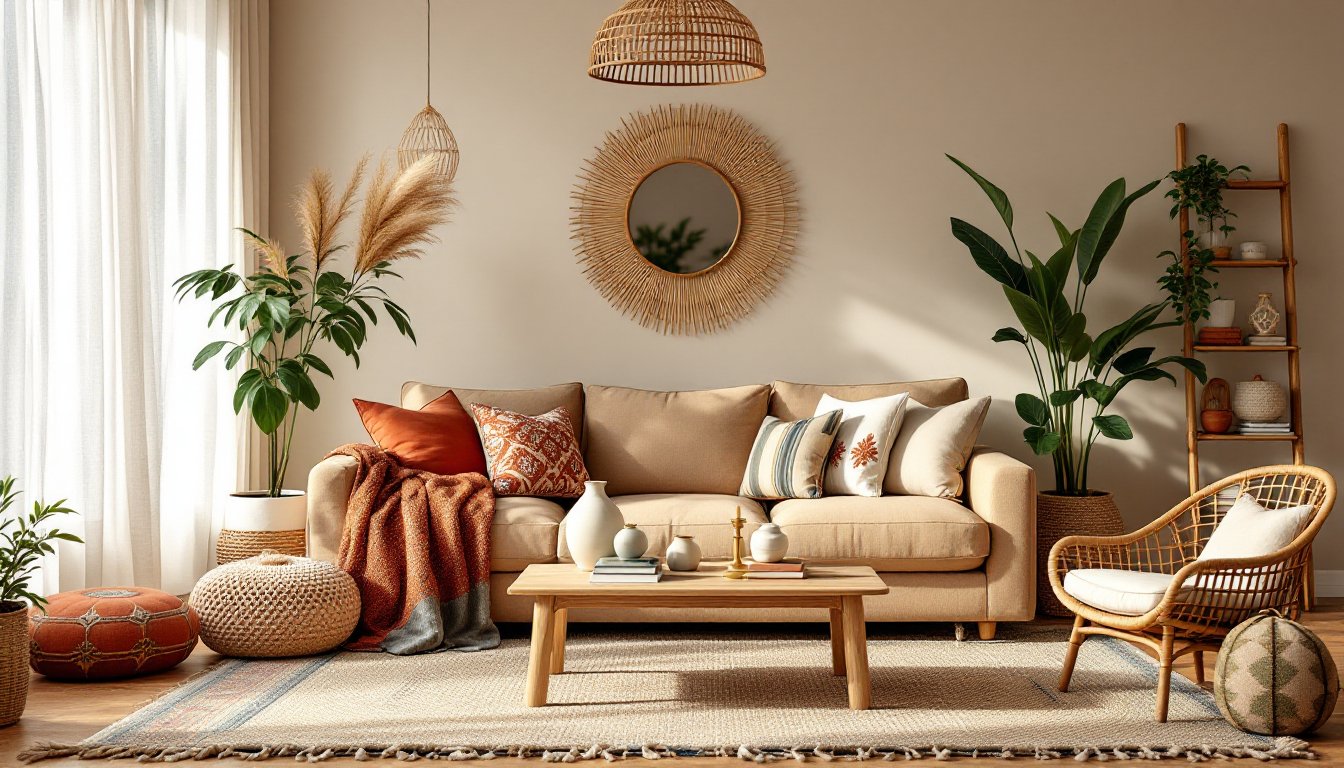
Boho chic living rooms blend global influences, vintage finds, and natural textures into spaces that feel collected, not curated. Unlike minimalist trends that prize restraint, bohemian style celebrates abundance, layered rugs, mismatched pillows, trailing plants, and art from flea markets or travels. It’s a look that rewards experimentation over perfection.
This guide walks through the core elements that make boho interiors work: from color schemes and furniture silhouettes to the textile layering and plant choices that give these rooms their signature warmth. Whether working with a bare apartment or refreshing an existing space, the steps below turn bohemian inspiration into a livable, cohesive room.
Boho chic marries the free-spirited aesthetic of 1960s and ’70s bohemian culture with a more refined, edited approach. The style draws from Moroccan textiles, Indian block prints, macramé from the craft revival, and midcentury furniture, all mixed without rigid rules.
Key characteristics include low-slung seating (floor cushions, poufs, daybeds), global textiles in rich patterns, and natural materials like rattan, jute, and unfinished wood. Unlike farmhouse or Scandinavian styles that lean heavily on whites and neutrals, boho embraces color, think terracotta, ochre, indigo, and jewel tones.
Another hallmark: intentional imperfection. Furniture doesn’t need to match. Frames can be mismatched. Rugs can overlap. The goal is a space that looks lived-in and personal, not staged. That said, boho isn’t chaotic: it still needs visual anchors, a dominant color thread, repeating material (like wood or woven fiber), or a focal point like a large wall hanging or vintage rug to keep the room from feeling cluttered.
Boho color schemes fall into two main camps: earthy neutrals and saturated jewel tones. Many successful rooms blend both.
The neutral route relies on warm tans, burnt sienna, rust, cream, and olive green, colors borrowed from desert landscapes and natural fibers. This palette works well in smaller spaces or rooms with limited natural light, since it keeps things airy while still feeling grounded.
The bolder approach layers deep blues, emerald greens, fuchsia, and gold. These hues come through in throw pillows, wall hangings, or upholstered pieces. Pairing jewel tones with natural wood and rattan prevents the palette from feeling too heavy.
Whatever direction chosen, walls typically stay neutral, off-white, warm beige, or soft terracotta. This lets textiles and art carry the color without overwhelming the senses. An accent wall in deep teal or clay red can work if the rest of the room stays restrained.
Metallic accents, brass, copper, or brushed gold, tie boho palettes together. These show up in light fixtures, mirror frames, or plant stands. Avoid mixing more than two metal finishes in one room to keep the look cohesive.
Boho furniture leans low and relaxed. Think floor seating, daybeds with bolster pillows, or sofas with deep cushions and wooden legs. Avoid stiff, formal pieces like tufted Chesterfields or high-armed club chairs.
Vintage and secondhand finds are staples. Midcentury credenzas, carved wood coffee tables, or rattan peacock chairs all fit. The key is mixing eras and origins, pairing a 1970s cane-back sofa with a Moroccan-inspired pouf and a reclaimed wood side table.
When buying new, prioritize natural materials: solid wood (mango, teak, or acacia), woven rattan, cane, or bamboo. Skip anything heavily lacquered or glossy: boho favors matte, textured finishes.
Modular floor seating like oversized cushions or tufted ottomans encourages casual gathering and flexibility. These can be rearranged as needed and work well in smaller spaces where a full sectional overwhelms.
Storage is often open or semi-concealed. Ladder shelves, open bookcases, and woven baskets keep the vibe relaxed while hiding clutter. Closed cabinets are fine, but choose ones with carved details, cane insets, or natural wood grain rather than flat, modern panels.
Textile layering is where boho style truly comes alive. The goal: overlapping patterns, fibers, and weights without visual chaos.
Start with area rugs. Layering two or three rugs, such as a large jute rug topped with a smaller vintage kilim or Persian runner, adds depth and defines zones in open-plan spaces. Make sure the bottom layer is a neutral that grounds the room.
On seating, pile throw pillows in varying sizes and patterns. Mix block prints, suzani embroidery, woven stripes, and solid linens. Aim for odd numbers (five or seven pillows on a sofa) and vary the shapes, square, lumbar, and round. Use natural-fiber covers like cotton, linen, or wool: avoid synthetic velvet or polyester blends that feel cheap.
Throws and blankets in chunky knits, waffle weaves, or fringed cotton add another layer. Drape them casually over chair arms or the back of a sofa.
Window treatments should feel light and unstructured. Linen or cotton curtains in off-white or soft ochre work better than heavy drapes. Macramé curtain tiebacks or wooden rings on a bamboo rod reinforce the handmade, global aesthetic.
Wall textiles, tapestries, woven hangings, or vintage rugs hung vertically, fill blank walls and improve acoustics. Use a curtain rod or decorative dowel for mounting: avoid standard picture-hanging wire, which can damage delicate fibers.
Boho rooms need a few bold focal points to anchor the mix of textures and patterns.
Large-scale wall art or mirrors work well. A round rattan mirror, an oversized macramé wall hanging, or a gallery wall of mismatched frames and prints all fit. Avoid symmetry, cluster pieces in an organic arrangement rather than a grid.
Lighting is critical. Swap builder-grade fixtures for pendant lights made from woven rattan, seagrass, or hammered metal. Moroccan lanterns (real pierced metal, not cheap imports with glued-on panels) add warmth when used as table or floor lamps. String lights or Edison bulbs on exposed cords can work but risk looking dorm-room unless paired with substantial furniture.
Decorative objects should feel collected and meaningful. Think ceramic vases in earthy glazes, carved wood bowls, brass candlesticks, or vintage finds from thrift stores and estate sales. Display these on open shelves, mantels, or coffee tables in small groupings, three items of varying heights work better than a single centered piece.
Books belong on display. Stack them on side tables or shelves, mixing vertical and horizontal orientations. Choose covers with warm tones or wrap less appealing spines in kraft paper.
Avoid matching decor sets. If everything comes from the same store or collection, the room loses the authentic, curated feel that defines boho style.
Plants are non-negotiable in boho interiors. They add life, texture, and air-purifying benefits, but only if chosen and placed thoughtfully.
Trailing plants like pothos, string of pearls, or philodendron work on shelves, mantels, or hanging planters. Use macramé plant hangers or woven baskets (with plastic liners to catch water) instead of generic plastic pots.
Large floor plants, fiddle leaf figs, rubber trees, or bird of paradise, act as living sculpture. Place them in corners or next to seating to soften hard angles. Choose natural fiber or ceramic planters in terracotta, white-washed clay, or woven seagrass. Skip glossy ceramics or brightly colored plastic.
Don’t overdo it. Five to seven plants in a medium-sized living room is plenty. More than that requires serious maintenance and risks turning the space into a greenhouse.
Beyond plants, bring in natural elements like driftwood, dried pampas grass, or branches in tall ceramic vases. These add sculptural interest and require no watering.
Woven baskets in varying sizes serve dual duty as storage and decor. Use them for blankets, magazines, or firewood. Stack different sizes in a corner or hang flat baskets on walls for texture.
Finally, consider natural fiber rugs, jute, sisal, or seagrass**, as foundational layers. These materials are durable, affordable (typically $100–$300 for an 8×10 rug), and provide a neutral base that grounds bolder textiles.
Boho chic living rooms succeed when they balance abundance with intention. The style rewards experimentation, mixing eras, patterns, and materials, but still needs a thread of continuity, whether through color, texture, or repeated natural materials. Start with foundational neutrals, layer textiles gradually, and add plants and vintage finds as they’re discovered. The result is a space that feels personal, warm, and genuinely lived-in.