Phone:
(701)814-6992
Physical address:
6296 Donnelly Plaza
Ratkeville, Bahamas.

Phone:
(701)814-6992
Physical address:
6296 Donnelly Plaza
Ratkeville, Bahamas.

I still remember the sinking feeling when my “perfect” sectional sofa arrived. I’d spent weeks researching, comparing prices, and finally splurged on a gorgeous L-shaped piece that looked stunning in the showroom. The measurements seemed right on paper: 2.7 meters along one wall, 2.1 meters on the return. It should have fit beautifully in my living room.
Except it didn’t. The moment the delivery team positioned it, I realized my expensive mistake. The sectional completely blocked the French doors to my balcony, created an awkward traffic pattern around the coffee table, and made the room feel cramped rather than cozy. Returning it cost me $400 in restocking fees and shipping, plus weeks of living with an empty room while I figured out what would actually work.
That painful lesson taught me something crucial: furniture decisions shouldn’t be made from measurements alone. You need to see how pieces will actually function in your space before you commit thousands of dollars to purchases you might regret.
Most of us approach furniture shopping the same way: we measure our rooms, browse online or in stores, check if the dimensions “should” fit, and hope for the best. We could sketch a rough floor plan or try to visualize how everything will look together. This approach seems logical, but it’s fundamentally flawed.
Paper measurements don’t account for visual weight and scale. A sofa might technically fit along your wall, but will it overwhelm the room or look awkwardly small? Numbers on a tape measure can’t tell you that. They also don’t reveal how furniture placement affects traffic flow, how pieces interact visually, or whether your planned arrangement creates functional living spaces or awkward dead zones.
Showroom displays are deliberately designed to make furniture look its best, often in rooms larger than those in typical homes. That dining table that looks perfectly proportioned in a showroom with 3.5-meter ceilings might dominate your space with 2.4-meter ceilings. The beautiful bedroom set displayed with generous clearances might leave you barely able to open dresser drawers in your actual room.
Online shopping adds another layer of difficulty. Product photos are carefully styled and often use wide-angle lenses that make pieces appear smaller than they actually are. Customer reviews mention “larger than expected” or “didn’t fit as planned” so frequently that it’s become an accepted risk of furniture shopping.
According to the National Retail Federation’s research on consumer returns, furniture has one of the highest return rates of any product category, with 15 to 20% of furniture purchases being returned. The primary reasons? Items don’t fit as expected, look different in person than imagined, or don’t work with existing furniture. These returns cost consumers billions annually in restocking fees, return shipping, and the time cost of living with unsuitable furniture while figuring out replacements.
Beyond the obvious financial waste of returns and restocking fees, furniture mistakes carry hidden costs that add up quickly. Living with poorly arranged or ill-fitting furniture affects your daily quality of life. A sofa that blocks natural light makes your room feel darker and more depressing. A bed positioned too close to the door disrupts sleep with noise and light from other rooms. A dining table that’s too large for the space makes every meal feel cramped and uncomfortable.
Poor furniture choices also impact your home’s resale value or rental appeal if you’re planning to move. Prospective buyers or tenants mentally furnish spaces when viewing properties. If your current furniture arrangement makes rooms feel small, awkward, or dysfunctional, viewers assume the space itself is the problem, not your furniture choices. This perception can cost you thousands in negotiating power.
There’s also the environmental cost. Furniture production has a significant environmental impact, from resource extraction to manufacturing to transportation. When pieces end up returned or discarded because they don’t work in your space, all those resources and carbon emissions were wasted. In an era of increasing environmental consciousness, making thoughtful furniture decisions matters beyond just your wallet.
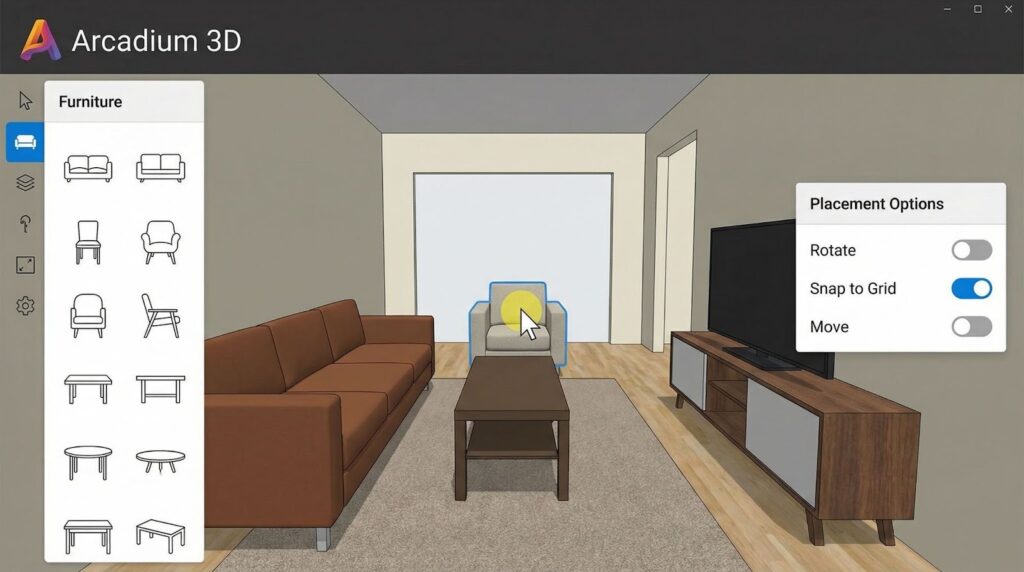
Digital room design technology has revolutionized how we can plan furniture purchases. Instead of relying on measurements, sketches, and imagination, you can now create accurate 3D models of your rooms and virtually test furniture arrangements before spending a single dollar.
The process starts with your exact room dimensions, including ceiling height, window and door locations, and architectural features like fireplaces, built-ins, or angled walls. You build a digital replica of your actual space, not a generic template that approximates it. This precision makes all the difference in planning accuracy.
Once your room model exists, you can place virtual furniture using real dimensions from actual products you’re considering. Want to see how that 2.4-meter sofa from IKEA will look next to your existing entertainment center? Place it in your virtual room. Curious if the king-size bed you’re eyeing leaves enough clearance to open your closet doors? Test it digitally. Wondering whether a round dining table or a rectangular one works better in your dining nook? Try both and compare them side by side.
Virtual room design lets you experiment fearlessly. You can test dozens of furniture arrangements, compare different styles and sizes, and identify problems before they become expensive mistakes. You can view your room from multiple angles, walk through it virtually, and get a realistic sense of how the finished space will look and function.
When planning furniture for my home office renovation last year, I used Arcadium’s room designer online tool to avoid repeating my sectional sofa disaster. Arcadium is a browser-based 3D room visualization platform that lets homeowners create detailed virtual models of their spaces and test furniture arrangements with professional-grade accuracy.
The setup process was remarkably straightforward. I measured my office carefully, noting the exact dimensions, window locations, door swing directions, and the location of electrical outlets and cable connections. I input these measurements into Arcadium and within minutes had a precise 3D model of my actual room.
What sets Arcadium apart from other room planning tools is the quality of its 3D rendering and the comprehensiveness of its furniture library. Compared to simple 2D floor plan tools or basic sketch apps, Arcadium provides photorealistic visualization that shows you exactly how your room will look. You’re not imagining or guessing; you’re seeing your finished space before it exists.
I was considering three different desk configurations: a traditional rectangular desk along one wall, an L-shaped desk in the corner, or a standing desk with a separate seating area. On paper, all three “fit” the room. Using Arcadium’s room design platform, I could see that the L-shaped desk blocked too much natural light from my window, the traditional desk left awkward dead space in the corner, but the standing desk with separate seating created a functional, well-balanced workspace.
Arcadium also revealed a problem I wouldn’t have noticed otherwise. My planned bookshelf placement would have blocked the air conditioning vent, creating heating and cooling inefficiency, plus potential damage to books. Catching this issue digitally saved me from an expensive HVAC problem down the road.
The platform is completely free and runs in any web browser, meaning you don’t need to download software, purchase licenses, or learn complicated CAD programs. For someone planning furniture purchases across multiple rooms, like I was doing, Arcadium became an essential tool for making confident decisions without the traditional trial-and-error approach that wastes money and time.
Unlike expensive interior design consultations that can cost $100 to $200 per hour, Arcadium gives you unlimited access to professional-quality room visualization. You can spend as much time as you need testing options, revising layouts, and perfecting your furniture plan before purchasing anything.
Start by measuring your room accurately. You’ll need overall dimensions, ceiling height, and the precise locations of windows, doors, electrical outlets, cable connections, and any architectural features like fireplaces, alcoves, or built-ins. Take photos from multiple angles as reference points for details you might have missed in measurements.
Create your digital room model using these exact measurements. Accuracy here is crucial because even small measurement errors compound when you’re planning furniture placement. Include architectural details like baseboards, crown molding, or window sills if they’ll affect furniture placement.
Identify the furniture pieces you’re considering purchasing. Collect exact dimensions from product specifications: length, width, height, and any clearances needed for drawers or doors to open fully. Most furniture retailers provide detailed dimension diagrams in their product listings.
Place virtual furniture in your digital room, starting with the largest pieces first. These anchor items, like sofas, beds, or dining tables, define your room’s layout and function. Position them where they make the most sense for traffic flow, natural light access, and room functionality.
Test multiple arrangements for each major piece. Don’t stop at your first idea. Try the sofa on different walls, rotate the bed to see how it affects room flow, and experiment with dining table positions. The beauty of virtual design is that testing options costs nothing but a few minutes of your time.
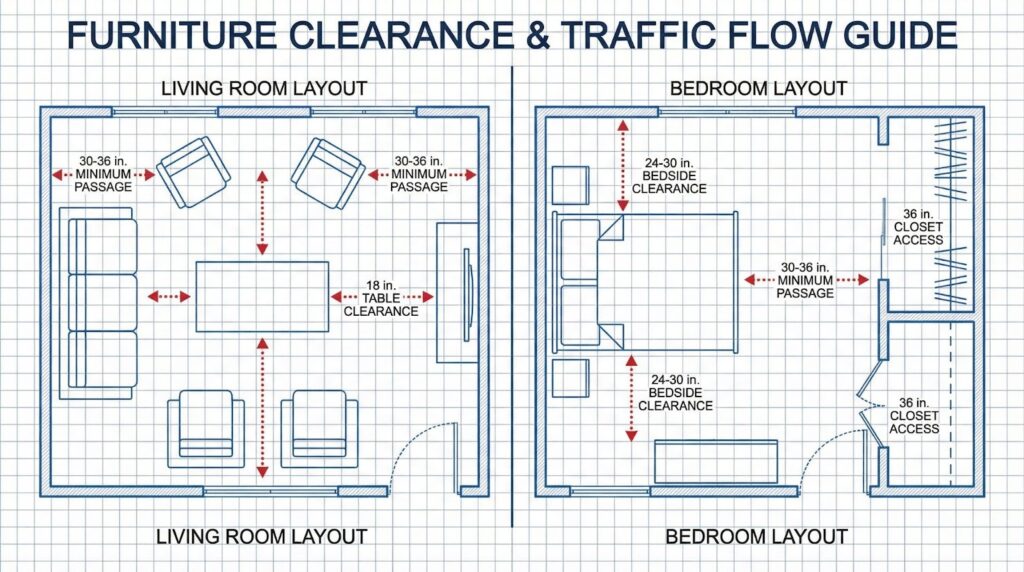
Consider traffic flow carefully. Leave at least 75 to 90 centimeters of clearance for main walkways and 60 centimeters for secondary paths. Visualize how people will move through the room in daily life. Can you walk from the bedroom door to the closet without navigating an obstacle course? Can dinner guests pull out chairs without bumping into walls or other furniture?
Evaluate visual balance and proportion. Step back and view your virtual room from multiple angles. Does one area feel overcrowded while another feels empty? Are large furniture pieces overwhelming the space or small pieces getting lost? Balanced rooms feel comfortable and intentional.
Check practical considerations like door swings, drawer clearances, and window access. Can you open your closet door fully without hitting the bed? Is there adequate space to pull out dresser drawers completely? Will furniture block windows or heating/cooling vents?
Save multiple design versions so you can compare options. Create one layout with your first choice of furniture, another with backup options, and a third with your budget-friendly alternatives. Comparing them side by side reveals which arrangement truly works best for your space and lifestyle.
The biggest mistake I see is ignoring scale and proportion. People choose furniture based on style and price without considering whether pieces are appropriately sized for their rooms. A massive sectional might be comfortable, but if it dominates your living room and makes the space feel cramped, you won’t enjoy it. Virtual room design lets you see these proportion issues before buying.
Blocking natural light is another frequent error. Positioning tall bookcases, wardrobes, or storage units in front of windows might maximize wall space, but it makes rooms feel darker and smaller. When you model your room virtually, these lighting impacts become immediately obvious, allowing you to find better furniture positions.
Many people also neglect to plan for furniture functionality. They ensure pieces fit spatially but forget to account for drawers that need clearance to open, reclining chairs that need space to extend, or cabinet doors that swing outward. Virtual design forces you to think about these functional requirements because you can test whether you have adequate clearance for daily use.
Poor traffic flow planning creates daily frustration in many homes. Furniture arrangements that force people to walk around multiple obstacles to reach common destinations, squeeze through narrow gaps between pieces, or navigate awkward paths make rooms feel smaller and less livable than they should. Modeling traffic patterns virtually helps you identify and fix these flow problems before they become part of your daily life.
Once you’ve mastered virtual furniture arrangement, you can extend these tools to other aspects of room design. Test paint colors and wallpaper patterns to see how they interact with your planned furniture. Experiment with different flooring options to ensure they complement your design scheme. Try various window treatment styles to find the right balance of privacy, light control, and aesthetics.
Virtual room design also helps with lighting planning. You can add lamps, overhead fixtures, and accent lighting to your model to ensure you have adequate illumination for different activities and times of day. This planning prevents the common problem of moving into a beautifully furnished room only to discover you don’t have enough light to read comfortably or that harsh overhead lighting creates an unwelcoming atmosphere.
For rooms with multiple functions, like guest bedrooms that double as home offices or living rooms that need dining space, virtual design helps you plan flexible arrangements. You can model how the room will function in each mode and ensure smooth transitions between uses. This is particularly valuable when creating functional living spaces that serve multiple purposes without feeling cluttered or compromised.
Spending a few hours planning your furniture purchases virtually might feel like extra work, but it’s an investment that pays for itself many times over. The money you save by avoiding return fees, wrong-sized purchases, and pieces that don’t work together adds up quickly. More importantly, you end up with rooms that function beautifully and look exactly how you envisioned them.
When you walk into furniture stores or browse online with a clear plan based on virtual room design, you shop with confidence rather than uncertainty. You know exactly what sizes work in your space, which styles complement each other, and how everything will come together. This clarity makes shopping faster, less stressful, and more successful.
The furniture in your home should enhance your life, not create daily frustrations. By taking time to virtually arrange your rooms before buying, you create spaces that truly work for how you live. You avoid the expensive mistakes that lead to buyer’s remorse, costly returns, and years of living with furniture that never quite feels right.
In an era when furniture costs more than ever and return policies are becoming less generous, virtual room planning isn’t a luxury for design enthusiasts. It’s a practical tool that every homeowner should use before making significant furniture purchases. Your future self, standing in a beautifully arranged room filled with furniture that fits perfectly and functions flawlessly, will thank you for the planning time you invested today.
