Phone:
(701)814-6992
Physical address:
6296 Donnelly Plaza
Ratkeville, Bahamas.

Phone:
(701)814-6992
Physical address:
6296 Donnelly Plaza
Ratkeville, Bahamas.
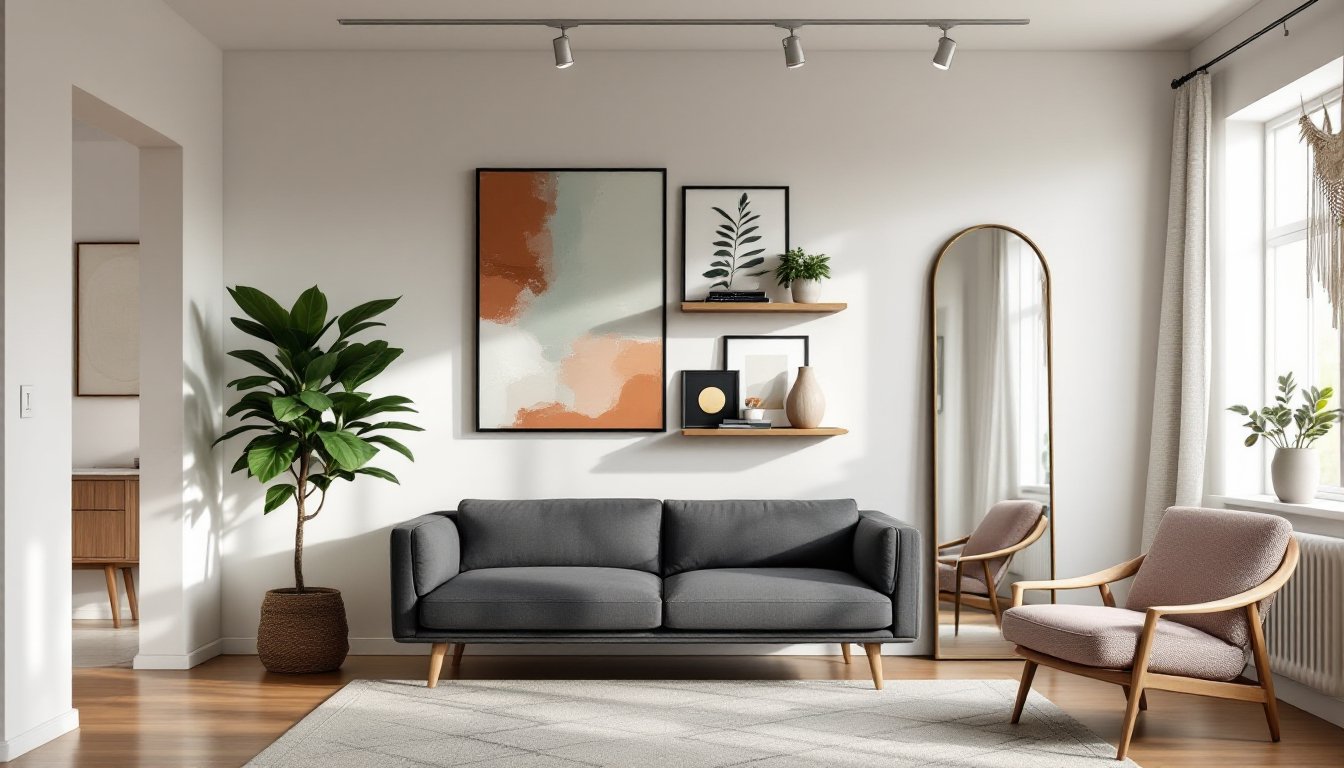
Blank walls make even the best furniture look unfinished. Living room wall decor does more than fill empty space, it sets the room’s tone, reflects personal style, and can even solve practical problems like poor acoustics or awkward proportions. In 2026, the approach has shifted from matching sets to intentional, layered looks that mix textures, scales, and materials. Whether working with a tight budget or ready to invest in statement pieces, homeowners have more options than ever. This guide covers the styles, strategies, and installation basics to turn bare walls into design anchors without calling in a decorator.
Wall decor anchors a room visually and functionally. In open-concept homes, it helps define the living zone without adding physical barriers. Large art or a wall-mounted shelf system draws the eye upward, making standard 8-foot ceilings feel taller. Textured pieces, woven hangings, wood panels, or acoustic tiles, can dampen echoes in rooms with hard flooring and minimal soft furnishings.
From a design standpoint, wall decor balances furniture weight. A low-profile sofa paired with blank walls feels bottom-heavy: adding a large mirror or multi-panel canvas brings equilibrium. It’s also the fastest way to inject color or pattern without committing to a full repaint or new upholstery.
Finally, wall treatments hide imperfections. Older homes with plaster cracks, outdated paneling, or patched drywall benefit from strategic placement of frames, tapestries, or board-and-batten treatments. These solutions cost less than resurfacing and add character in the process.
Statement art means one oversized piece, typically 36 inches or larger on the shortest side, that commands attention. Canvas prints, framed photography, or original paintings work well above a sofa or fireplace. When hanging, the center of the artwork should sit at 57 to 60 inches from the floor, which aligns with average eye level in a standing position. Use two D-rings and picture wire rated for the frame’s weight, or mount directly to wall anchors in drywall (toggle bolts for weights over 30 pounds, molly bolts for lighter loads). Always locate studs with a stud finder for the most secure mount.
Gallery walls group smaller frames, usually 5 to 15 pieces, in a cohesive layout. The key is planning on the floor first: arrange frames on kraft paper templates taped to the wall, mark nail positions, then hang. Keep spacing consistent, typically 2 to 3 inches between frames. Mix frame sizes but stick to one or two finish colors (black, natural wood, white) to avoid visual clutter. Include a variety of orientations, landscape, portrait, square, for rhythm. For renters or those avoiding nail holes, adhesive picture strips (rated to the frame weight) are a reliable alternative on smooth painted walls.
Mirrors amplify natural light and make small living rooms feel larger. A full-length leaner mirror (65 to 75 inches tall) propped against a wall adds drama without hardware. For wall-mounted options, use mirror clips or a French cleat system for anything over 20 pounds. Position mirrors opposite windows to bounce daylight, but avoid placing them where they’ll reflect clutter or create glare on TV screens.
Sunburst mirrors, arched floor mirrors, and antiqued glass panels are trending in 2026, moving away from the plain beveled rectangles of the past decade. Grouped smaller mirrors, round, hexagonal, or irregular shapes, create a sculptural effect similar to a gallery wall but with added depth. Just ensure they’re mounted level: even a one-degree tilt is obvious in a mirror.
Under $50:
$50–$200:
$200+:
Scale matters. Measure the wall space before shopping. A common mistake is choosing art that’s too small. For the wall above a sofa, aim for a piece (or grouped pieces) that spans two-thirds to three-quarters of the sofa’s width. For a single piece over a console table, keep it narrower than the table by 4 to 8 inches on each side.
Consider the room’s function. If the living room doubles as a media room, avoid highly reflective surfaces near the TV. If it’s a high-traffic zone with kids or pets, skip fragile items at lower heights. In homes with forced-air heating or cooling, avoid placing valuable art directly above vents where temperature swings and dust accumulation accelerate deterioration.
Match the wall surface to the hardware. Drywall requires anchors unless you hit a stud. Plaster walls need special drill bits (masonry bits) and plastic or brass anchors designed for dense materials. Brick or concrete calls for a hammer drill, masonry bits, and sleeve anchors or tapcon screws. Always wear safety glasses when drilling overhead or into masonry: dust and debris fall directly into the face.
Color and contrast. Light-colored walls handle bold, saturated art well. Dark walls need either high-contrast pieces (white matting, metallic frames) or items with internal contrast to avoid disappearing into the background. Neutral art works on any wall color but can read flat without texture or dimensional elements.
Lighting enhances everything. Picture lights (battery-operated or hardwired) add gallery-style emphasis. Track lighting or adjustable recessed cans let homeowners spotlight art and adjust as pieces rotate. Warm white LEDs (2700K to 3000K) render colors naturally without the harshness of daylight bulbs.
Living room wall decor transforms empty space into a reflection of personality and function. From budget-friendly DIY shelves to investment-grade original art, the right approach balances scale, style, and practical mounting techniques. Measure carefully, plan layouts before drilling, and don’t shy away from mixing textures and formats. With the strategies above, anyone can turn blank walls into intentional design features that anchor the room and stand the test of time.