Phone:
(701)814-6992
Physical address:
6296 Donnelly Plaza
Ratkeville, Bahamas.

Phone:
(701)814-6992
Physical address:
6296 Donnelly Plaza
Ratkeville, Bahamas.
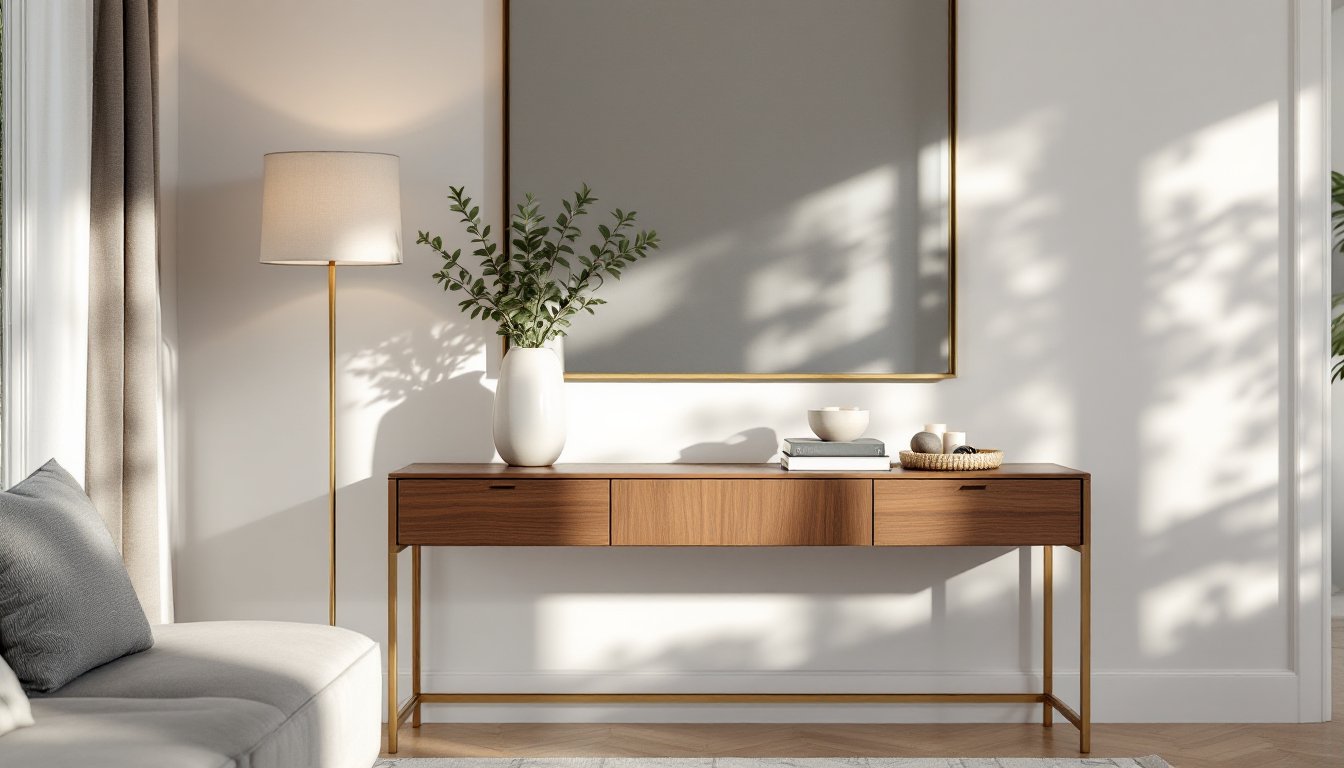
A console table can anchor a living room, or fade into irrelevance. The difference comes down to styling. Whether tucked behind a sofa, flanking a doorway, or lining a narrow wall, a well-dressed console table adds visual weight, storage, and personality without demanding square footage. Most homeowners treat it as an afterthought, dumping mail and remote controls until the piece becomes clutter camouflage. But with intentional decor choices, balancing height, texture, and function, a console table becomes a focal point that pulls a room together.
Console tables occupy transitional zones: the space behind a couch, the stretch of wall between windows, or the corridor leading into a room. These areas lack the natural anchors of seating groups or media centers, so they rely on deliberate styling to feel finished.
A bare console table reads as unfinished. A cluttered one creates visual noise. The sweet spot is curated decor that serves dual purposes, looks good and works hard. Styled correctly, a console table provides landing spots for everyday items (keys, wallets, charging cables) while displaying decor that reflects the homeowner’s taste.
From a design standpoint, console tables also solve vertical balance problems. Living rooms dominated by low furniture, sofas, coffee tables, ottomans, can feel squat. A console table with layered decor draws the eye upward, adding dimension and breaking the monotony of horizontal lines.
Functionality matters, too. Console tables often live in high-traffic zones. Decor should accommodate this: nothing too delicate, easily knocked over, or obstructive. The goal is to enhance the space, not create obstacles or maintenance headaches.
Every well-styled console table shares a few core components: anchor pieces, layered heights, texture variation, and functional accents. These elements work together to create visual interest without feeling staged.
Anchor pieces are the largest items, typically a lamp, a mirror, or oversized artwork. These establish scale and give the eye a starting point. A console table without an anchor feels incomplete, like a sentence without a subject.
Layering prevents flatness. Decor clustered at one height looks tentative and one-dimensional. Mixing tall lamps with mid-height vases and low trays or books creates rhythm. The rule of three works well here: group items in odd numbers for a more organic arrangement.
Texture adds depth. Smooth ceramic, rough woven baskets, polished metal, matte wood, combining materials keeps the display from looking sterile or monochromatic. Even neutrals benefit from varied finishes.
Functional accents tie the display to real life. A decorative bowl corrals keys. A small tray organizes remotes. A stack of coasters stays within reach. These pieces justify the console table’s existence beyond pure aesthetics.
Height variation is non-negotiable. Start with a tall anchor, a table lamp (24 to 32 inches including shade) or a vertical piece of framed art. Position it off-center, not dead-center, unless the console table sits perfectly centered under a window or mirror.
Next, add mid-height elements: vases (10 to 18 inches), potted plants, or sculptural objects. These should complement the anchor, not compete with it. Avoid matching heights: stagger them by at least 4 to 6 inches for clear differentiation.
Finish with low, horizontal pieces: stacked books, shallow bowls, candles, or small trays. These ground the arrangement and provide visual rest.
Depth matters as much as height. Push some items toward the back (anchors, tall objects) and pull smaller pieces forward. This layering creates a three-dimensional tableau instead of a lineup. Leaning artwork against the wall instead of hanging it adds casual depth and flexibility, no nail holes required.
Console table decor should echo the room’s existing style. Mismatched aesthetics create friction, rustic wood bowls on a sleek minimalist table, or chrome accents in a farmhouse room.
Modern/Minimalist console tables favor clean lines and restraint. Think monochromatic palettes, geometric vases, a single sculptural object, and maybe a slim table lamp with a drum shade. White, black, gray, and metallics dominate. Less is more: three to five pieces max.
Traditional styling leans on symmetry. Matching lamps flanking a centered mirror or framed print create formal balance. Materials include polished wood, porcelain, brass, and classic tabletop accessories like candlesticks or ceramic ginger jars. Florals, real or faux, often appear in tall vases.
Farmhouse/Rustic console tables embrace texture and patina. Reclaimed wood trays, galvanized metal buckets, mason jars, vintage books, and greenery (real or convincingly faux) define the look. Neutral tones, whites, creams, taupes, mix with natural wood and iron finishes.
Eclectic/Boho decor thrives on variety. Layered textiles (a runner or woven mat), plants in mismatched pots, globally inspired objects (carved wood, woven baskets, ceramic pieces), and bold color pops create an collected-over-time vibe. The key is intentional variety, not randomness.
Coastal console tables favor light, airy palettes: whites, blues, sandy neutrals. Materials include driftwood, coral, glass hurricanes, nautical rope accents, and linen textures. The mood stays relaxed and uncluttered.
Choosing the right decor items separates a thoughtful display from a random pile. Here are proven categories that deliver both form and function:
Table Lamps: A staple anchor piece. Choose a lamp 24 to 32 inches tall to provide ambient lighting and fill vertical space. Battery-operated or cordless lamps work well if outlets are scarce. Styles range from ceramic bases with linen shades to sleek metal designs.
Mirrors and Artwork: Leaning or hanging above the console table amplifies light and adds architectural interest. A large mirror (30 to 40 inches) visually expands the room. Framed prints or canvases introduce color and personality.
Vases and Vessels: Varying heights (small bud vases to 18-inch statement pieces) hold fresh flowers, faux stems, or stand alone as sculptural elements. Ceramic, glass, or metal finishes add texture.
Books: Stacked horizontally in groups of three to five, coffee table books add height, color, and conversational interest. They also serve as risers for smaller objects.
Trays and Bowls: Corralling smaller items, keys, coasters, candles, keeps surfaces tidy. Wood, metal, or woven trays define zones within the tabletop. Shallow bowls in ceramic or stone work similarly.
Greenery: Real or high-quality faux plants introduce life and soften hard edges. Low-maintenance options include pothos, snake plants, or succulents. Faux stems (eucalyptus, olive branches) suit homeowners without green thumbs.
Candles and Hurricanes: Pillar candles in hurricanes or taper candles in holders add warmth and ambiance. LED flameless candles eliminate fire risk in high-traffic areas.
Decorative Objects: Sculptural pieces, ceramic figurines, geodes, or found objects (shells, driftwood) add personality. Limit to one or two statement pieces to avoid clutter.
Even experienced DIYers stumble into predictable console table pitfalls. Avoiding these keeps the display polished and functional.
Overcrowding: Packing every available inch creates visual chaos. Leave 20 to 30 percent of the tabletop bare. Negative space lets individual pieces breathe and makes the arrangement feel intentional.
Ignoring scale: Tiny objects on a long console table look lost. Conversely, oversized items on a narrow table feel cramped. Match decor scale to table dimensions, large tables (60+ inches) need substantial anchors, while compact tables (30 to 40 inches) work better with fewer, smaller pieces.
Flat arrangements: Decor at uniform height lacks dimension. Incorporate vertical, mid-level, and low elements. If everything sits at the same plane, the display reads as an afterthought.
Neglecting the wall above: A console table should connect visually to what’s above it, mirror, artwork, sconce, or floating shelf. Leaving the wall bare misses an opportunity to complete the vignette.
Skipping function: A console table in a high-traffic area needs to earn its keep. If it’s purely decorative and forces occupants to work around it, resentment builds. Incorporate trays, bowls, or baskets that handle everyday items.
Using fragile or wobbly items: Console tables, especially those behind sofas, get bumped. Tall, top-heavy vases or precarious stacks are accidents waiting to happen. Prioritize stable, durable pieces.
Forgetting lighting: If the console table sits in a dim corner, decor disappears. A table lamp or nearby sconce ensures the display gets noticed, especially in evening hours.
Console table decor transforms underutilized wall space into a functional, eye-catching feature. The process boils down to balancing height, texture, and purpose, anchoring with larger pieces, layering varied elements, and leaving room to breathe. Avoid clutter, match the room’s style, and choose items that work as hard as they look. With these principles, any console table evolves from a flat surface into a living room asset.