Phone:
(701)814-6992
Physical address:
6296 Donnelly Plaza
Ratkeville, Bahamas.

Phone:
(701)814-6992
Physical address:
6296 Donnelly Plaza
Ratkeville, Bahamas.
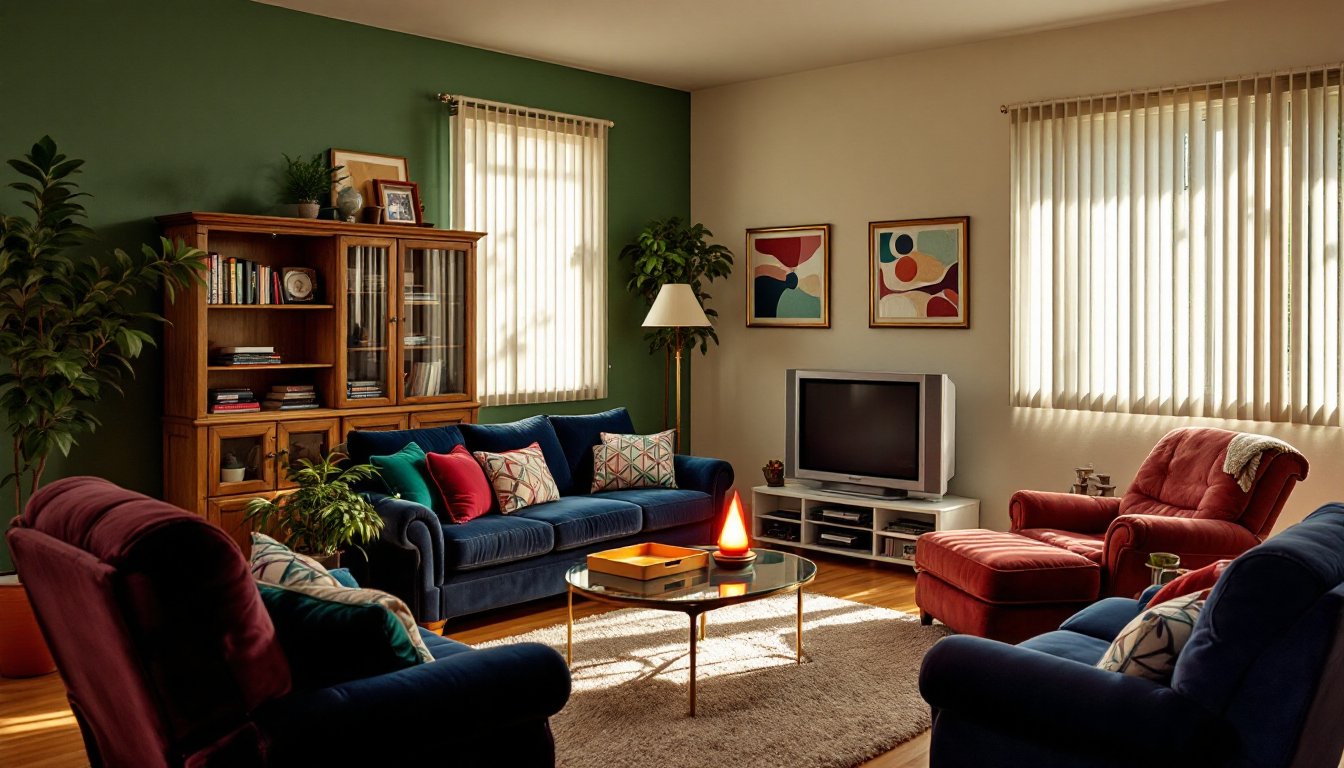
The 90s are back, and not just in fashion. Homeowners are dusting off the era’s bold design choices, from jewel tones and geometric prints to overstuffed sectionals and entertainment centers built like fortresses. What once felt dated now reads as nostalgic, playful, and refreshingly different from the gray-and-white minimalism that’s dominated the past decade. Recreating a 90s living room isn’t about buying vintage pieces off Craigslist (though that helps). It’s about understanding the core elements, color, texture, silhouette, and adapting them to modern standards of comfort and function. This guide breaks down the key components, offers practical sourcing tips, and shows how to balance throwback style with livability.
Nostalgia cycles run about 20 to 30 years, which puts the 90s squarely in the crosshairs for millennials and Gen Z decorating their first real living spaces. Unlike the colder, minimalist trends of recent years, 90s design embraced maximalism, warmth, and personality. People are craving color again, something the decade delivered in spades.
Another factor: sustainability. Buying secondhand or refurbishing 90s furniture keeps pieces out of landfills and often costs less than new big-box equivalents. The era’s solid wood entertainment centers, heavy coffee tables, and upholstered sectionals were built to last, unlike much of today’s particleboard furniture.
Finally, there’s the tactile appeal. The 90s layered textures, microfiber, faux suede, shag rugs, woven throws, in ways that feel cozy and lived-in. In a post-pandemic world where living rooms double as home offices and gyms, comfort matters more than ever.
The 90s didn’t do neutral. Jewel tones, emerald green, sapphire blue, deep plum, and burgundy, dominated upholstery, accent walls, and window treatments. These saturated hues pair well with natural wood finishes (think oak and cherry), which were everywhere in cabinetry and trim.
For walls, hunter green, mauve, and teal were common accent choices, often paired with off-white or cream on adjacent walls. If painting, use a satin or eggshell finish for easy cleaning, flat paints show every scuff, especially in high-traffic areas. One gallon of quality interior paint typically covers 350–400 square feet with one coat: plan for two coats when going dark over light.
Geometric patterns showed up on everything: upholstery, throw pillows, area rugs, and even wallpaper borders (usually installed about 18 inches below the ceiling). Think bold triangles, abstract squiggles, and Memphis Group–inspired shapes in contrasting colors. Avoid wallpapering entire rooms unless committed to the look, borders are easier to remove and less visually overwhelming.
Southwestern and Native American–inspired prints also had a moment, especially in textiles. If sourcing vintage pieces with these motifs, be mindful of cultural appropriation and opt for designs from Indigenous artists or licensed reproductions when possible.
The overstuffed sectional was the centerpiece. These L-shaped or U-shaped sofas featured deep seats, rolled arms, and enough cushioning to swallow a person whole. Upholstery ranged from microfiber (stain-resistant and affordable) to tapestry-style fabric with busy patterns. Look for used sectionals with hardwood frames and eight-way hand-tied springs if possible, they’ll outlast modern foam-and-staple construction.
Oak and cherry entertainment centers dominated one wall, often spanning 6 to 8 feet wide and standing over 6 feet tall. These units housed the TV (a boxy CRT, but more on that later), VCR, CD player, and rows of VHS tapes or CDs. Solid wood versions are heavy, get help moving them and secure them to wall studs using furniture anchors (especially critical if kids or pets are in the home). A 1/4-inch lag bolt into a stud can support significant weight, but toggle bolts work for drywall if studs aren’t accessible.
Glass-top coffee tables with brass or gold-tone metal frames were ubiquitous. The glass was usually 1/4-inch to 3/8-inch thick tempered safety glass, which shatters into small, less dangerous pieces if broken. If buying vintage, inspect for chips or cracks, even small damage compromises structural integrity.
Recliners in leather or faux leather (often in shades of brown or burgundy) were standard. Bonus points if they included built-in cup holders or a side lever instead of a button. Check the reclining mechanism for smooth operation: worn cables or bent frames are expensive to repair.
Finally, the TV tray set. Folding wooden trays with a storage rack were essential for eating dinner in front of Seinfeld or Friends. They’re still practical and widely available secondhand.
Start with area rugs. The 90s loved high-pile shag in neutral tones or bold geometrics. A 5×7-foot or 8×10-foot rug anchors a seating area: make sure it’s large enough that at least the front legs of the sofa and chairs sit on it. Use a non-slip rug pad underneath to prevent shifting and reduce wear on both the rug and flooring.
Throw pillows were plentiful and mismatched. Combine solid jewel tones with geometric or abstract patterns. Look for pillow inserts with at least 80% feather fill for that authentic squishy, overstuffed look, polyester fills can feel stiff.
Potted plants were big, literally. Ficus trees, pothos, and spider plants thrived in the 90s living room, often placed in ceramic pots with Southwestern or faux-stone finishes. If the space lacks natural light, choose low-light tolerant species or supplement with a grow light (look for full-spectrum LEDs rated for houseplants).
Wall art leaned into framed posters (movie prints, abstract art, or motivational phrases in bold fonts), mirrors with ornate gold or brass frames, and multi-panel canvas prints. Hang artwork at eye level, typically 57 to 60 inches from the floor to the center of the piece. Use picture-hanging wire and D-rings on the back of frames for stability, and anchor into studs or use wall anchors rated for the weight.
Lava lamps, neon signs, and tabletop fountains added ambient flair. Modern reproductions are safer and more energy-efficient than vintage versions but check wattage and keep cords tidy with cable management clips.
Don’t forget vertical blinds (usually vinyl or fabric) or mini blinds (1-inch aluminum slats). Both are functional and period-correct, though they collect dust, plan to vacuum or wipe them monthly.
The entertainment center wasn’t just furniture, it was a shrine. If going full nostalgia, source a CRT TV (13-inch to 27-inch models are easiest to find and move). Be aware: CRTs are heavy and contain hazardous materials. A 27-inch CRT can weigh 70+ pounds. Lift with your legs, get help, and never attempt to disassemble one without proper training, they hold high-voltage charges even when unplugged.
For a safer nod to the era, mount a modern flat-screen on the wall or place it on a vintage entertainment center. Hide cables with cable raceways or in-wall conduit (the latter may require cutting into drywall and fishing wires, doable for confident DIYers but consider an electrician if running new outlets).
Stock the shelves with VHS tapes, CD cases, and cassette holders. Thrift stores are goldmines. Even if the media isn’t functional, it’s set dressing that sells the aesthetic.
A VCR and CD player can still be sourced used. For actual playback, check that rubber belts and laser lenses are functional, these degrade over time. Alternatively, modern Bluetooth speakers designed to look vintage give better sound quality without the maintenance hassle.
Not everyone wants to commit fully to the decade. Here’s how to blend 90s style with 2026 livability.
Edit the color palette. Instead of painting all four walls hunter green, try one accent wall and keep the rest neutral. This prevents the space from feeling dark or cramped, especially in smaller rooms.
Upgrade upholstery fabrics. Modern performance fabrics mimic the look of microfiber or suede but resist stains and wear better. Brands like Crypton and Sunbrella offer options that are kid- and pet-friendly without sacrificing the 90s silhouette.
Swap CRT bulk for streaming tech. Use a slim TV and conceal streaming devices inside a vintage cabinet. Add LED strip lighting inside glass-door compartments for a modern glow that highlights the retro housing.
Choose quality over quantity in accessories. A single statement lava lamp or neon sign reads as intentional: a dozen looks cluttered. Curate.
Mix eras strategically. Pair a 90s sectional with a mid-century modern side table or a contemporary floor lamp. The contrast keeps the space from feeling like a time capsule and adds visual interest.
Improve lighting. The 90s often relied on overhead fixtures and maybe one torchiere lamp. Layer in task lighting (reading lamps, under-cabinet LEDs) and use dimmers to control ambiance. Swap incandescent bulbs for LEDs that match the color temperature (2700K–3000K for warm white) but last longer and use less energy.
Recreating a 90s living room in 2026 is part treasure hunt, part design exercise, and entirely doable on a range of budgets. The era’s emphasis on comfort, color, and personality offers a welcome break from sterile trends. Whether going full nostalgia or cherry-picking elements, the key is balancing authenticity with function. Measure twice, shop secondhand when possible, and don’t skip the shag rug.