Phone:
(701)814-6992
Physical address:
6296 Donnelly Plaza
Ratkeville, Bahamas.
Phone:
(701)814-6992
Physical address:
6296 Donnelly Plaza
Ratkeville, Bahamas.
Wall decor separates the homes that feel finished from those that don’t. But there’s a difference between filling blank space and creating a luxury aesthetic that elevates the entire room. High-end wall treatments aren’t just about spending more, they’re about intentionality, proportion, and craftsmanship. Whether it’s a single statement piece in the entryway or a textured accent wall in the primary bedroom, luxury decor speaks to quality materials, thoughtful placement, and design cohesion. This guide walks through the wall treatments and decor strategies that designers lean on to deliver polished, lasting impact without veering into trends that age poorly.
Luxury wall decor isn’t measured by price tags alone. It’s defined by a few consistent characteristics: quality materials, attention to scale and proportion, and restraint. Instead of overcrowding every vertical surface, high-end spaces feature fewer, more impactful pieces.
Materials matter. Solid hardwood frames beat hollow plastic or MDF every time. Metal finishes should be brushed brass, oil-rubbed bronze, or powder-coated steel, not shiny gold spray paint. Textiles like linen, silk, or wool add warmth without looking cheap. Canvas prints fade and sag: archival-quality giclée prints on heavyweight paper or museum-grade canvas hold up decades longer.
Scale drives impact. A single oversized piece (think 48″ × 60″ or larger) commands more presence than a cluster of small prints. Rooms with high ceilings (9 feet or more) can handle vertically oriented art or floor-to-ceiling installations. Standard 8-foot ceilings benefit from horizontal compositions that draw the eye across the wall rather than up.
Cohesion over chaos. Luxury spaces don’t mix ten different styles on one wall. If the room leans modern, the wall decor should echo clean lines and minimal ornamentation. Traditional interiors pair well with ornate frames, classical portraiture, or botanical prints. Mixing styles works when there’s a deliberate throughline, shared color palette, frame finish, or subject matter.
A statement art piece is the visual anchor of a room. It’s what guests notice first and what sets the tone for everything else.
Original art vs. prints. Original paintings, mixed-media works, or sculptures carry inherent value and uniqueness. Emerging artists often offer accessible pricing for one-of-a-kind pieces that appreciate over time. High-quality prints work when they’re limited editions, signed and numbered, or archival reproductions of museum pieces. Avoid mass-market canvas prints from big-box stores, they cheapen the space.
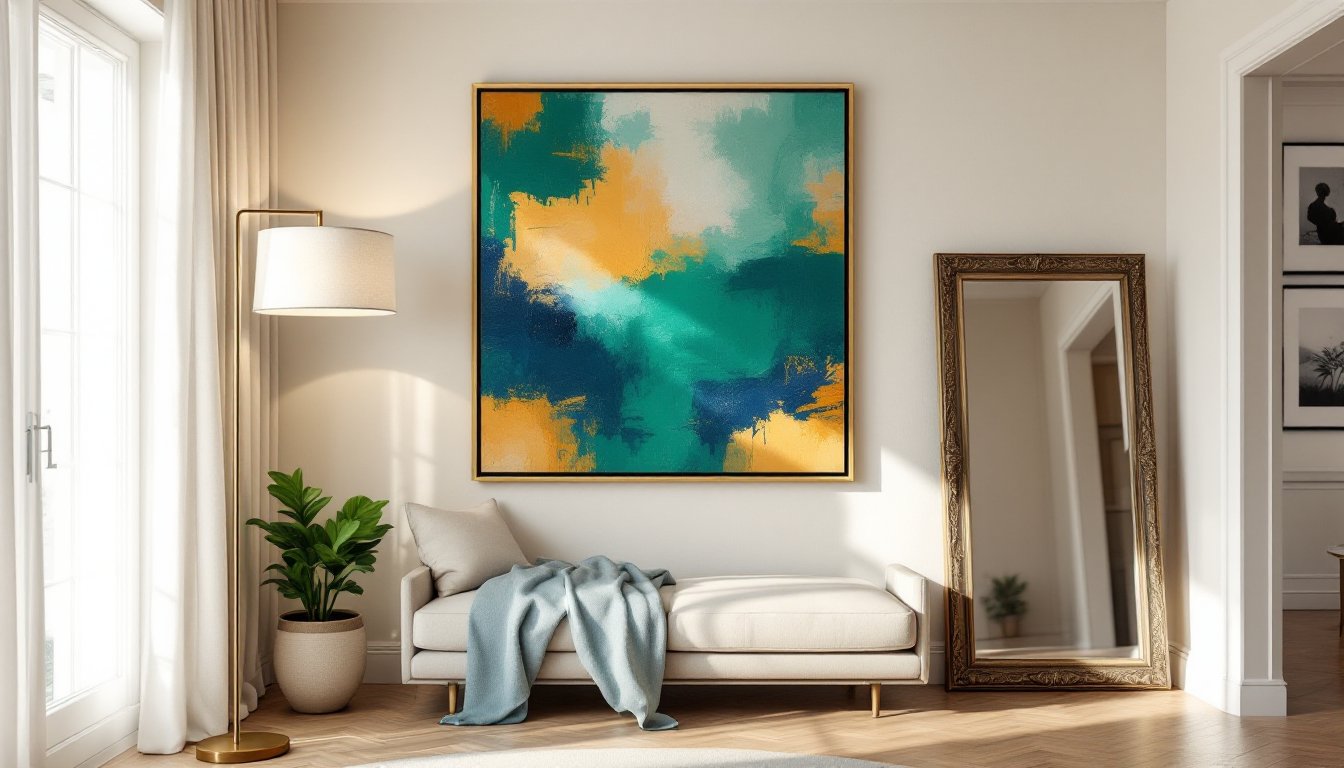
Abstract vs. representational. Abstract art offers flexibility: it complements multiple design styles without dictating a specific mood. Representational work (landscapes, portraits, figurative) can anchor a theme but requires more careful placement. A bold abstract in jewel tones might tie together a velvet sofa and brass lighting, while a large black-and-white photograph suits minimalist or industrial interiors.
Framing and hanging hardware. Custom framing isn’t optional for luxury decor. A mat board in archival-quality linen or cotton adds depth and protects the artwork. Frame profiles should be 1.5″ to 3″ wide for substantial presence. Use French cleats or heavy-duty picture wire rated for the frame’s weight, standard sawtooth hangers fail on pieces over 20 pounds. Mount the center of the artwork at 57″ to 60″ from the floor, the average eye level in most homes.
Flat paint is functional, but texture delivers dimension that shifts with natural light throughout the day.
Grasscloth and natural fiber wallpapers. Grasscloth wallpaper, woven from seagrass, jute, or bamboo, adds organic texture without pattern overload. It’s ideal for dining rooms, powder rooms, or accent walls in bedrooms. Expect to pay $80–$200 per roll (covering roughly 36 square feet), and hire a professional installer. Grasscloth is unforgiving: seams show if not aligned perfectly, and adhesive can bleed through the weave.
Plaster finishes and limewash. Venetian plaster and limewash paint create subtle variations in tone and texture that mimic old-world European interiors. These finishes require two to three coats applied with a trowel or specialized brush. DIYers with drywall experience can handle limewash: Venetian plaster is best left to pros. Both are breathable, low-VOC, and develop a soft patina over time.
Three-dimensional wall panels. Decorative wall panels in wood, MDF, or polyurethane add architectural interest. Shiplap, board-and-batten, picture-frame molding, and geometric 3D panels all introduce shadow lines and depth. Install panels over drywall using construction adhesive and finish nails (18-gauge brad nails work for lightweight MDF). Paint them in the same color as the wall for subtle texture, or contrast them for drama.
Safety note: Always wear a dust mask when cutting MDF or sanding plaster. MDF releases fine particulates: plaster dust is alkaline and irritating.
Mirrors do more than reflect, they amplify light, create the illusion of space, and serve as sculptural elements.
Oversized leaning mirrors. A 6′ × 3′ or 7′ × 4′ floor mirror leaned against a wall (secured with L-brackets screwed into studs) opens up tight spaces and adds vertical drama. Frame finishes in aged brass, blackened steel, or walnut veneer elevate the look beyond basic builder-grade mirrors. Position them opposite windows to bounce natural light deeper into the room.
Antique and vintage mirrors. Vintage mirrors with foxing (the natural spotting that occurs as silvering ages) introduce character. Architectural salvage shops and estate sales often have ornate gilt mirrors, sunburst designs, or Federal-style pieces for $200–$800, far less than comparable new reproductions. Verify the mirror is securely backed and re-silver if the reflection is too degraded.
Mirror gallery walls. Clustered mirrors in varying shapes, round, rectangular, arched, create visual interest without the commitment of a traditional gallery wall. Mix frame finishes (brass, wood, matte black) but keep a consistent tone (all warm metals or all cool). Use heavy-duty adhesive strips rated for the mirror’s weight, or mount with screws into drywall anchors or studs. Each mirror should be independently secured: relying on a single anchor point risks failure.
Gallery walls can look expensive or chaotic. The difference is curation and execution.
Unified framing. The fastest way to a polished gallery wall is consistent frame style. All black frames, all natural wood, or all brass creates cohesion even when the art varies. Mat boards should be uniform in color, off-white, charcoal, or no mat at all. Mixing frame styles works only if there’s a strong visual anchor, like identical mat widths or a strict grid layout.
Grid vs. salon-style layouts. A grid layout (evenly spaced frames in aligned rows) reads modern and controlled. A salon-style wall (asymmetrical, organic spacing) feels collected and layered but requires more planning. For salon walls, cut kraft paper templates to match each frame’s dimensions, tape them to the wall, and adjust until the composition feels balanced. Mark nail holes through the paper before removing it.
Spacing and alignment. Maintain 2″ to 3″ between frames for breathing room. Align the bottom edge of the lowest row or the top edge of the highest row to create a visual baseline. Avoid floating clusters with no reference line, they look accidental.
Installation tools. Use a laser level to ensure horizontal and vertical alignment. A stud finder helps locate solid anchoring points. For drywall, use drywall anchors rated for 50 lbs or more per frame. Picture-hanging strips work for lightweight frames (under 10 lbs) but aren’t suitable for valuable art.
Luxury decor isn’t about copying a showroom, it’s about selecting pieces that align with how the space is actually used.
Consider durability and maintenance. Homes with kids or pets benefit from acrylic or Plexiglas glazing instead of glass, it’s shatter-resistant and lighter. Textured wallpapers in high-traffic areas should be scrubbable or vinyl-coated. Avoid delicate silk textiles or unprotected paper art in humid bathrooms or sunny west-facing rooms: UV exposure and moisture degrade them quickly.
Reflect personal interests without kitsch. A vintage surfboard mounted on the wall works in a coastal home if it’s a genuine board with wear and history, not a mass-produced decorator prop. Collection displays, cameras, instruments, heirloom textiles, become luxury decor when thoughtfully framed or mounted. Shadow boxes with UV-protective acrylic preserve three-dimensional objects.
Room-specific choices. Entryways and living rooms handle bold, conversation-starting pieces. Bedrooms benefit from calming, neutral art, abstracts in muted tones or serene landscapes. Kitchens and dining rooms suit food-related art, botanical prints, or vintage culinary posters, but frame them behind glass to protect from grease and humidity.
Long-term value. Invest in pieces that age well. Solid wood, metal, and archival paper outlast particle board and fadeable inkjet prints. Timeless subjects, abstract compositions, black-and-white photography, classic portraiture, don’t fall out of favor the way trendy motifs do.
Luxury wall decor isn’t about following a formula, it’s about choosing quality materials, respecting scale, and editing ruthlessly. Whether it’s a single oversized canvas, a textured plaster wall, or a carefully composed gallery arrangement, the best installations feel intentional and permanent. Skip the mass-market shortcuts, invest in proper installation hardware, and prioritize pieces that will still look sharp a decade from now. That’s how walls go from decorated to designed.