Phone:
(701)814-6992
Physical address:
6296 Donnelly Plaza
Ratkeville, Bahamas.

Phone:
(701)814-6992
Physical address:
6296 Donnelly Plaza
Ratkeville, Bahamas.
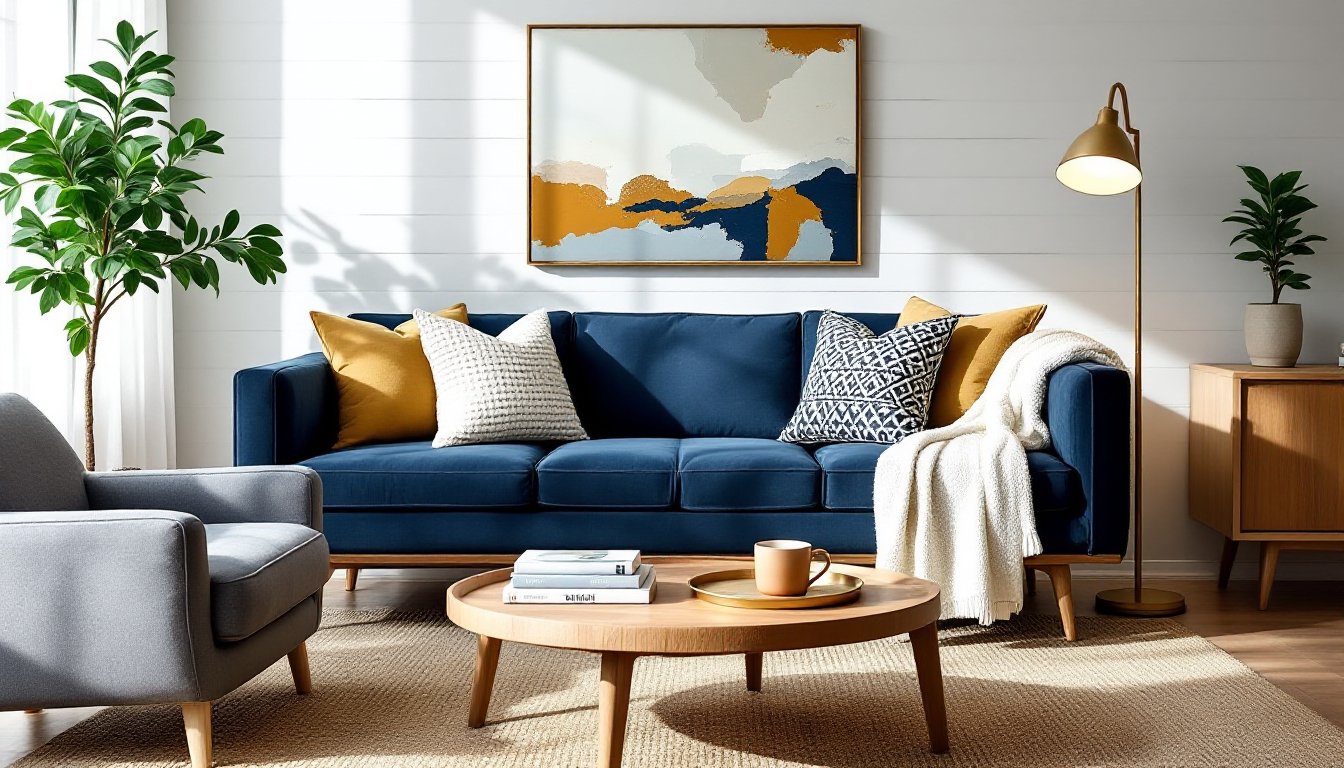
A blue sofa anchors a living room like few other pieces can, it’s bold enough to make a statement but versatile enough to work with nearly any design style. Whether someone’s working with a deep navy sectional or a bright cerulean loveseat, the right decor decisions turn that sofa from a furniture purchase into the foundation of a cohesive, inviting space. The challenge isn’t finding ideas: it’s knowing which colors, textures, and layouts actually work in real rooms with real constraints. This guide walks through practical strategies for styling around a blue sofa, from choosing complementary palettes to arranging furniture in ways that maximize both function and visual appeal.
Blue sits in a unique position on the color wheel, it reads as both calming and commanding depending on the shade and context. A navy blue sofa grounds a room with the same visual weight as a neutral charcoal piece, but with more personality. Lighter blues, think powder, sky, or slate, open up smaller spaces and reflect natural light without disappearing into the background.
Unlike trendy colors that date a room within a few years, blue has staying power. It pairs naturally with warm woods, metals like brass and bronze, and stone surfaces. Designers lean on blue because it bridges traditional and modern aesthetics without forcing a commitment to either camp. A tufted royal blue velvet sofa works in a classic setting: the same shade in a clean-lined linen frame fits a minimalist layout.
The practical advantage: blue hides wear better than lighter neutrals. It’s more forgiving with pet hair and daily use than cream or beige, but doesn’t show dust and lint the way black upholstery does. For households that actually live in their living rooms, that durability matters as much as the design appeal.
The palette surrounding a blue sofa determines whether the room feels cohesive or chaotic. Two main approaches work reliably: leaning into neutrals for sophistication or layering bold accents for energy. Neither is inherently better, it depends on the room’s size, natural light, and how the space gets used.
White, beige, gray, and taupe create breathing room around a blue sofa. This approach works especially well when the sofa itself is a saturated shade, navy, cobalt, or indigo. A white shiplap wall or pale gray paint (Benjamin Moore’s Gray Owl or Sherwin-Williams Repose Gray are solid starting points) lets the sofa stand out without visual competition.
Layering neutrals prevents the room from feeling flat. Mix warm and cool tones: a cream jute rug under the sofa, charcoal linen curtains, a driftwood coffee table. Natural wood tones, oak, walnut, teak, add warmth without introducing new colors. For upholstery accents, oatmeal or greige throw pillows in linen or cotton keep the palette tight.
This route works in rooms with strong architectural features (crown molding, coffered ceilings, built-ins) because it doesn’t compete with those details. It also makes small living rooms feel larger by maintaining visual simplicity.
Blue plays well with unexpected partners when the goal is a more layered, collected look. Mustard yellow, burnt orange, terracotta, and coral all create warm contrast against cool blue. These combinations feel intentional rather than accidental when the accent colors appear in multiple places, a mustard throw blanket, terracotta pottery on a shelf, orange-spined books on the coffee table.
Emerald green and teal lean into an analogous color scheme (neighbors on the color wheel), which reads as harmonious rather than jarring. A teal accent chair or emerald velvet curtains alongside a blue sofa creates depth without the stark contrast of complementary colors.
For those willing to go bolder, blush pink and burgundy add richness. A blush rug softens a navy sofa: burgundy throw pillows intensify a powder blue one. The key with bold pairings: use the 60-30-10 rule. The blue sofa and walls take up 60% of the visual weight, a secondary color (like a rug or curtains) covers 30%, and punchy accents hit the remaining 10% through pillows, art, or small decor.
Texture prevents a blue sofa from reading as a flat block of color. Even if the palette stays monochromatic, varying the tactile qualities of fabrics and materials adds dimension.
Linen, cotton, and canvas introduce matte, casual texture that works in both modern and farmhouse-leaning spaces. A chunky knit throw blanket in cream or ivory draped over one arm softens a structured sofa and invites actual use. Velvet or chenille pillows catch light differently than flat-weave fabrics, adding subtle visual interest without pattern.
For pattern, start with scale. A blue sofa is a large-scale element, so small-scale patterns (tight geometrics, delicate florals, fine stripes) on pillows or a rug won’t compete. Medium-scale patterns, like a bold ikat, oversized plaid, or graphic tribal print, work when limited to one or two accent pieces. Mixing patterns successfully means varying the scale and keeping a consistent color thread. If the sofa is navy, a navy-and-white striped pillow plus a smaller geometric in navy and gold creates cohesion.
Natural fiber rugs (jute, sisal, seagrass) add coarse texture underfoot and ground the sofa without introducing new colors. Layer a patterned flatweave or vintage Persian rug over the natural fiber base for more complexity.
Wood finishes, metal accents, and stone surfaces also count as texture. A raw wood coffee table with visible grain, a hammered brass side table, or a marble lamp base all contribute tactile variety that keeps the eye moving.
Accessories pull a room together, but only when they serve a purpose beyond filling space. Around a blue sofa, decor should either enhance the color story, add function, or introduce a focal point.
Throw pillows are the easiest starting point. Aim for three to five pillows in varied sizes (22-inch, 20-inch, and 18-inch inserts work well). Mix solid colors with one or two patterned options. If the sofa is a cool blue, warm-toned pillows (rust, camel, gold) create balance. For a warmer teal or turquoise sofa, cooler accents like gray or white keep it crisp.
Wall art should pick up at least one color from the sofa or surrounding palette. An abstract piece with navy, gold, and cream ties the room together. Black-and-white photography works with any blue shade. Oversized art (at least two-thirds the width of the sofa) anchors the wall behind the seating area. Smaller gallery walls can work, but they require tighter spacing, 3 to 6 inches between frames, to avoid a scattered look.
Lighting adds both function and style. A brass or black floor lamp beside the sofa provides task lighting for reading. Table lamps on side tables should sit at roughly eye level when seated, about 58 to 64 inches from the floor to the top of the shade. Ceramic, glass, or wood bases add another texture.
Greenery softens hard edges and introduces life. A fiddle leaf fig or snake plant in a corner, or smaller potted plants on shelves, bring organic shape and color. Stick to real plants when possible, faux greenery reads as filler unless it’s high-quality.
Avoid clutter. A stack of three to five books on the coffee table, a tray to corral remotes, and one or two decorative objects (a bowl, a sculpture, a candle) are plenty. More than that and the space starts looking staged rather than lived-in.
Furniture arrangement dictates how a room functions. A blue sofa becomes a true centerpiece when positioned intentionally, not just shoved against the longest wall.
Floating the sofa a few feet off the wall creates a more intimate conversation area and allows space for a console table behind it. This works in larger rooms (14 feet wide or more) and adds walking paths on multiple sides. In smaller spaces, placing the sofa against a wall is fine, just pull side tables and lamps away from the corners to avoid a pushed-back look.
Anchor with a rug. The rug should be large enough that at least the front legs of the sofa and any accent chairs sit on it. An 8×10 rug works for most standard living rooms: go up to 9×12 if the space is larger or if a sectional is involved. Leaving 12 to 18 inches of bare floor between the rug edge and the walls keeps proportions balanced.
Create a focal point. If there’s a fireplace, position the sofa facing it. In rooms without architectural features, a large piece of art or a media console can serve as the anchor. The sofa should face or angle toward that element.
Add complementary seating. Two accent chairs opposite the sofa form a natural conversation zone. In tighter spaces, one chair and an ottoman work. Keep pathways at least 30 to 36 inches wide for comfortable movement. The coffee table should sit 14 to 18 inches from the front edge of the sofa, close enough to reach, far enough to avoid knee-bumping.
In open-concept layouts, use the sofa as a room divider. Position it perpendicular to a wall to separate the living area from a dining zone or entryway. A console table behind the sofa reinforces the division and adds surface space.
Test the layout before committing. Painter’s tape on the floor marking furniture footprints shows whether the arrangement allows clear sightlines to the TV, easy conversation, and functional traffic flow. Adjust before moving heavy pieces.