Phone:
(701)814-6992
Physical address:
6296 Donnelly Plaza
Ratkeville, Bahamas.
Phone:
(701)814-6992
Physical address:
6296 Donnelly Plaza
Ratkeville, Bahamas.
Your attic insulation works quietly in the background, so it’s easy to assume it’s doing its job year after year. Unlike a roofing system or an HVAC unit, insulation doesn’t have moving parts that clearly fail. Instead, its performance gradually declines, making the changes difficult to notice until energy bills climb or indoor comfort begins to suffer.
For homeowners in South Florida, where extreme heat and humidity place constant stress on a home’s thermal envelope, aging insulation can have a much greater impact than many realize. Understanding the warning signs can help you address the problem before it leads to higher utility costs or reduced indoor comfort.
Many homeowners believe insulation lasts forever, but every material has a practical service life. Years of temperature fluctuations, humidity, settling, pests, and occasional moisture exposure slowly reduce its effectiveness. Even when insulation still appears to cover the attic floor, it may no longer provide the thermal resistance your home needs.
Choosing the best insulation for attic applications isn’t only about selecting the right material—it’s also about recognizing when the existing insulation has reached the end of its useful life.
One of the earliest warning signs is a gradual increase in cooling costs without any major change in energy usage. When insulation loses its ability to slow heat transfer, your HVAC system must run longer to maintain the thermostat setting.
Many homeowners assume the air conditioner is failing, but the real problem often begins above the ceiling.
If bedrooms upstairs remain warmer than the rest of the house or certain rooms never reach the desired temperature, uneven insulation coverage may be responsible.
Proper attic insulation creates a consistent thermal barrier across the entire attic. Once that barrier becomes uneven because of settling or deterioration, temperature differences become much more noticeable.
Blown insulation naturally settles over time, but excessive settling creates thin areas where heat can pass through much more easily.
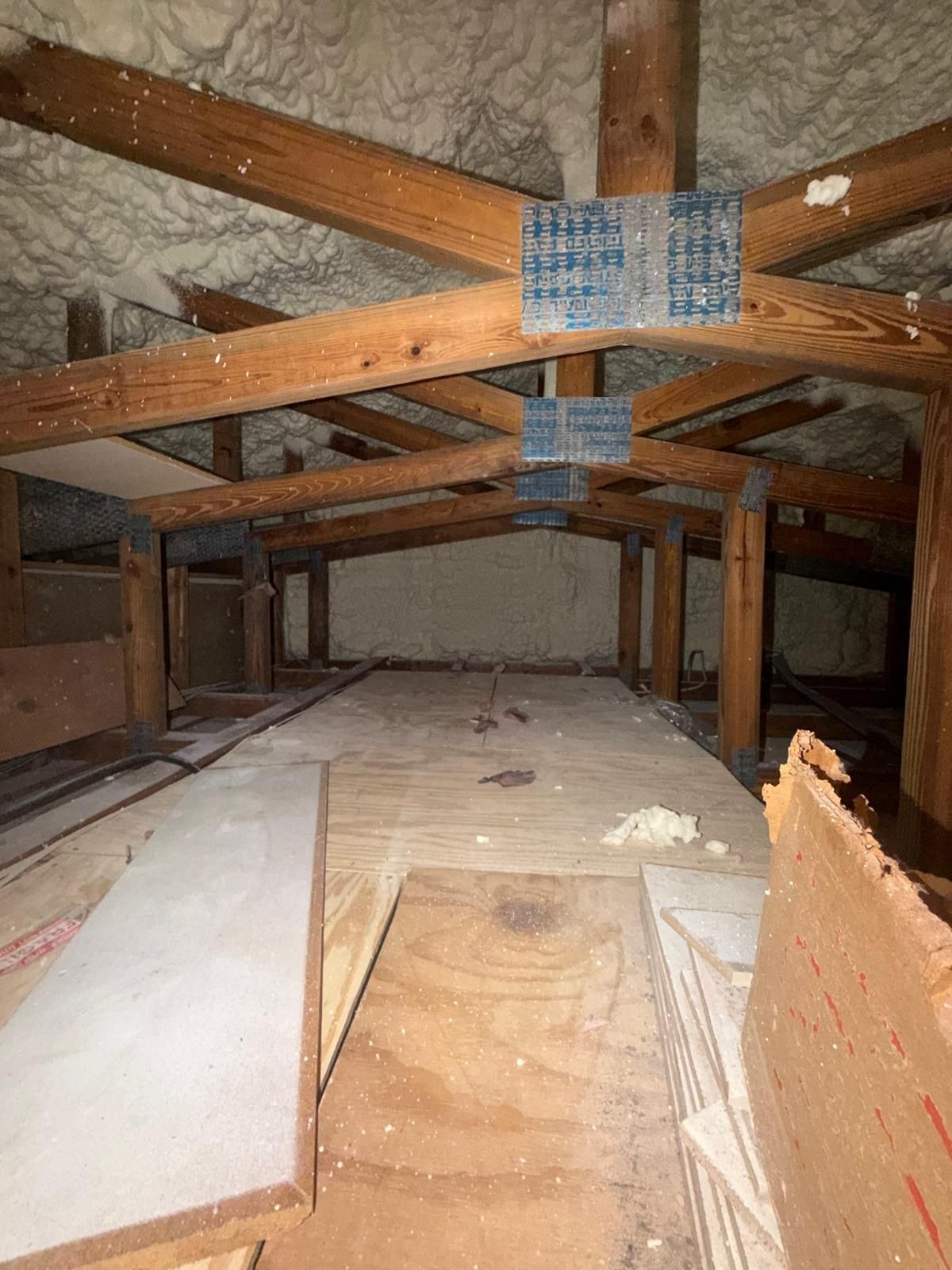
During an attic inspection, you’ll often notice valleys, exposed ceiling joists, or inconsistent insulation depth. Even small gaps reduce the overall effectiveness of the insulation system because heat always follows the path of least resistance.
Moisture is one of insulation’s biggest enemies.
Roof leaks, condensation, or high humidity can cause insulation to retain water, reducing its insulating value while creating conditions that encourage mold growth. Wet insulation also dries very slowly because airflow inside the attic is often limited.
In South Florida’s humid climate, moisture damage can develop long before homeowners notice visible staining on ceilings.
If your home seems dusty shortly after cleaning, your attic could be contributing to the problem.
As insulation ages, it may collect contaminants or begin breaking down into fine particles. Combined with small air leaks around light fixtures, ductwork, or ceiling penetrations, these particles can gradually enter the living space whenever the HVAC system operates.
Longer cooling cycles don’t always indicate mechanical issues.
When the attic absorbs large amounts of solar heat, weakened insulation allows that heat to transfer into the home throughout the day. The air conditioner must continuously remove this extra heat, increasing wear on the equipment while consuming more electricity.
This is one reason many energy specialists consider improving insulation the best way to insulate attic spaces before investing in larger HVAC equipment.
Many homeowners describe their house as feeling “warm” even though the thermostat shows the correct temperature.
This often happens because surfaces such as ceilings continue radiating heat into occupied rooms. Modern blow-in attic insulation reduces this radiant heat transfer, allowing rooms to feel comfortable without forcing the air conditioner to work continuously.
The improvement is usually noticeable not only in temperature but also in overall indoor comfort.
Insulation performs differently depending on where a home is located.
Although manufacturers also design attic insulation for cold climates to prevent indoor heat from escaping during winter, homes in South Florida face the opposite challenge. The primary goal is limiting heat entering the home from an extremely hot attic while managing year-round humidity. This makes proper insulation depth, complete coverage, and moisture resistance especially important.
Adding new insulation over old material isn’t always the best solution.
If the existing insulation has been contaminated by moisture, pests, or mold, or if it has significantly deteriorated, replacing it often restores far better thermal performance than simply increasing the insulation depth. A complete evaluation can also identify hidden air leaks or ventilation issues that reduce overall efficiency.
For this reason, many homeowners choose to inspect the attic before investing in HVAC upgrades or other expensive energy improvements.
Attic insulation rarely fails overnight. Instead, its performance gradually declines until the signs become impossible to ignore—higher utility bills, uneven temperatures, longer HVAC cycles, increased dust, and reduced indoor comfort.
For homeowners throughout South Florida, recognizing these warning signs early can prevent unnecessary energy waste and improve year-round comfort. Attic Fanatics helps homeowners evaluate existing insulation, identify hidden performance issues, and recommend solutions tailored to each home’s needs. Whether an attic requires additional blow-in insulation, removal of damaged materials, or a complete insulation upgrade, addressing the problem at its source can significantly improve energy efficiency, indoor comfort, and long-term home performance.
Attic Fanatics USA
📍 Address: 5821 SW 21st St, West Park, FL 33023
📧 Email: [email protected]
📞 Phone: +1 (833) 381-1383