Phone:
(701)814-6992
Physical address:
6296 Donnelly Plaza
Ratkeville, Bahamas.

Phone:
(701)814-6992
Physical address:
6296 Donnelly Plaza
Ratkeville, Bahamas.
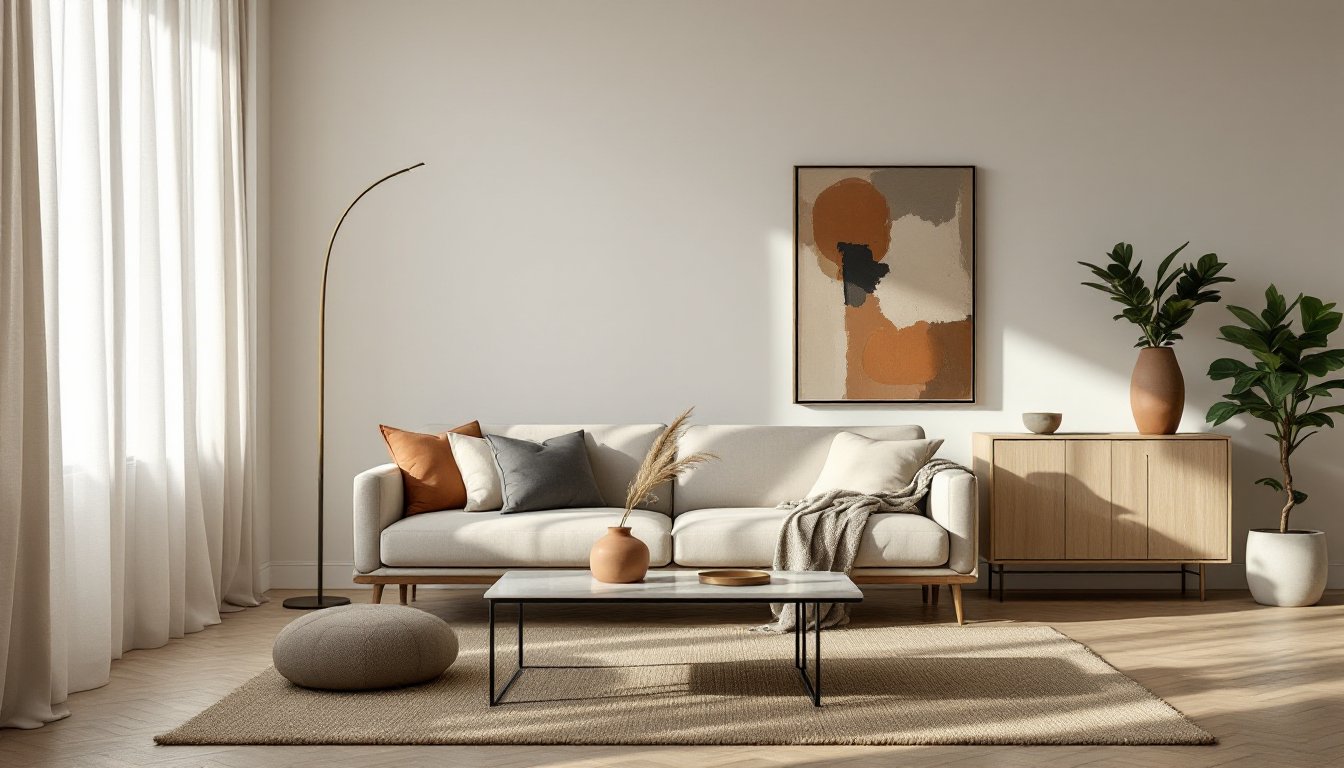
Minimalist living room design isn’t about stripping a space bare, it’s about making deliberate choices that reduce visual noise and highlight what matters. Every piece earns its place. The goal is a room that feels open, calm, and functional without sacrificing warmth or personality. This approach works especially well in smaller homes where clutter compounds quickly, but it’s equally effective in larger spaces that risk feeling cold or empty. The following strategies cover color, furniture selection, spatial planning, texture, and lighting, all grounded in practical execution rather than abstract inspiration.
Minimalist design prioritizes function over decoration, clean lines over ornamentation, and quality over quantity. It’s rooted in the principle that fewer, better-chosen elements create more visual rest and usable space.
Key characteristics include:
This isn’t about adhering to a rigid aesthetic. A minimalist living room can incorporate vintage pieces, bold art, or natural materials, as long as the overall effect remains uncluttered and cohesive. The design should reduce decision fatigue when entering the space, not announce itself as a style statement.
Neutral palettes form the backbone of minimalist interiors because they recede visually, allowing architecture and furnishings to take focus. Think whites, soft grays, beiges, taupes, and warm off-whites rather than stark clinical tones.
Wall paint in shades like Benjamin Moore’s Swiss Coffee or Sherwin-Williams’ Accessible Beige provides warmth without color distraction. Flat or matte finishes (which hide imperfections better than satin) work well on walls with good prep, but eggshell offers easier cleaning in high-traffic areas.
Flooring should complement, not compete. Light oak, white-washed hardwood, or large-format porcelain tile in concrete or stone looks create continuity. If working with existing carpet, neutral low-pile or looped styles (avoiding busy patterns) maintain the minimalist vibe.
Accent colors belong in small, controllable doses, a single rust-colored throw pillow, a charcoal vase, or a piece of framed art. Limit accent hues to one or two across the entire room to avoid fragmentation. The restraint is what makes those touches feel deliberate rather than random.
Every piece of furniture should justify its footprint. Minimalist living rooms avoid excess seating, redundant side tables, or decorative-only items.
Sofas and chairs with low profiles, straight arms, and exposed legs (rather than skirted bases) create visual lightness. A three-seat sofa in linen or performance fabric offers durability and a relaxed texture. Avoid overstuffed sectionals unless the room is large enough to handle the mass without crowding sightlines.
Coffee tables and side tables benefit from materials like solid walnut, powder-coated steel, or tempered glass. A rectangular coffee table in ½-inch tempered glass on a matte black steel frame provides function without visual weight. Alternatively, a live-edge walnut slab on hairpin legs brings organic warmth while maintaining simplicity.
Storage pieces, like a low credenza or floating media console, should conceal clutter. Look for designs with push-latch doors (no visible hardware) or recessed pulls. A credenza roughly 60–72 inches wide works for most living rooms, offering ample hidden storage for remotes, chargers, books, and throw blankets.
Skip anything purely decorative. If a chair isn’t comfortable enough to sit in, it doesn’t belong. If a shelf exists only to hold tchotchkes, reconsider it.
Negative space, the empty areas between and around objects, is a design tool, not wasted real estate. It allows the eye to rest and makes a room feel larger and more breathable.
Start by mapping traffic flow. Ensure at least 30–36 inches of clearance for walking paths between furniture. If the room serves multiple functions (conversation area, TV viewing, reading nook), define zones with furniture orientation rather than rugs or dividers.
Pull furniture away from walls. Floating a sofa even 12–18 inches off the wall can make the room feel more curated and less like a waiting room. Anchor seating around a central focal point, a fireplace, a picture window, or a media console, but leave breathing room on all sides.
Avoid filler furniture. If a space feels empty, resist the urge to cram in an extra chair or decorative ladder. Empty corners are fine. A single sculptural floor lamp or large potted plant can occupy a corner more effectively than three small objects competing for attention.
Use painter’s tape on the floor to mock up furniture footprints before committing to a layout. It’s easier to adjust a tape outline than to move a sofa three times.
Minimalism risks feeling cold if it leans too heavily on hard surfaces and monochrome palettes. Texture is the antidote, it adds depth and tactile interest without introducing visual chaos.
Textiles are the easiest avenue. Layer a chunky knit throw in undyed wool over a linen sofa. Choose a jute or sisal area rug in a natural fiber to ground the seating area: an 8×10 rug typically works for a standard living room, with front furniture legs resting on the rug and rear legs off.
Incorporate varied materials across surfaces. Pair a smooth concrete-look coffee table with a nubby linen chair and a matte ceramic vase. The contrast in finishes, rough and smooth, matte and gloss, creates visual interest without requiring more objects.
Wood tones bring warmth. A single floating shelf in solid oak, a walnut side table, or a teak stool introduces organic grain without clutter. Stick to one or two wood species across the room to maintain cohesion.
Avoid excessive pillows. Two or three per sofa is sufficient, choose pillows in linen, cotton canvas, or wool with minimal patterns. Solid colors or subtle texture weaves (like a herringbone or basket weave) maintain simplicity.
Lighting shapes how a minimalist space feels. Harsh overhead lighting flattens a room, while layered lighting, ambient, task, and accent, adds dimension without adding clutter.
Ceiling fixtures should be understated. A flush-mount fixture in brushed nickel or matte black, or a simple drum pendant, provides ambient light without becoming a focal point. If the room has recessed cans, install dimmer switches to control mood and intensity.
Floor and table lamps offer task and accent lighting. Choose designs with clean geometry, an arched floor lamp with a marble base, or a cylindrical table lamp in ceramic or metal. Avoid fussy shades or ornate bases. Aim for 2700K–3000K bulbs (warm white) to maintain a soft, inviting glow.
Maximize natural light. Keep window treatments minimal, linen or cotton curtains in white or light gray, mounted just below the ceiling and extending to the floor, make windows feel taller. If privacy isn’t a concern, skip treatments entirely or use simple roller shades.
Plants add life and improve air quality. A single large fiddle-leaf fig or rubber plant in a matte ceramic or concrete planter makes more impact than a cluster of small pots. Group plants in odd numbers (one or three) if using multiples, and keep planters in a cohesive material and color.
Creating a minimalist living room is about subtraction and intention, not deprivation. Focus on fewer, higher-quality pieces that serve clear functions and bring genuine pleasure. Prioritize open space, cohesive materials, and layered lighting to build a room that feels calm rather than clinical. The result is a space that’s easier to maintain, more restful to occupy, and adaptable as needs change.