Phone:
(701)814-6992
Physical address:
6296 Donnelly Plaza
Ratkeville, Bahamas.
Phone:
(701)814-6992
Physical address:
6296 Donnelly Plaza
Ratkeville, Bahamas.
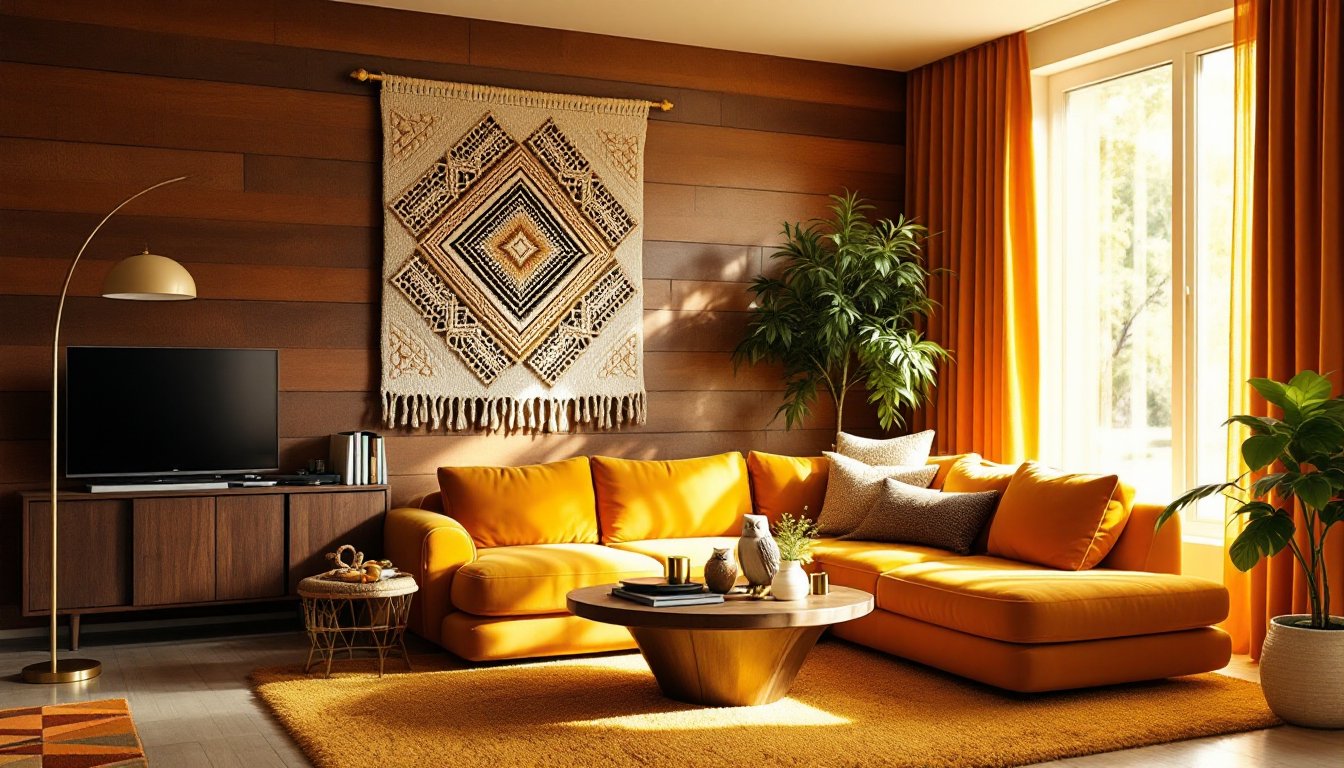
Harvest gold, burnt orange, and shag carpet deeper than a suburban lawn, the 1970s brought a design language that swung hard away from midcentury minimalism toward something earthier, funkier, and unapologetically bold. While some trends deserve to stay buried in avocado-colored graves, 70s living room decor has made a serious comeback, blending nostalgia with a warmth that today’s sparse interiors often lack. This isn’t about recreating a time capsule: it’s about understanding what made the decade tick and borrowing the pieces that still work.
Seventies design was a reaction, a move away from the sleek, cool lines of the 1960s and toward tactile, organic, and often overstuffed interiors. The decade embraced conversation pits, sunken living rooms, and layouts that prioritized lounging over formality. Furniture sat low to the ground, whether it was a modular sectional or a kidney-shaped coffee table.
Natural materials dominated: wood paneling (often walnut or pine), exposed brick, cork, and stone. But the era also leaned into synthetics, acrylic chairs, laminate surfaces, and enough polyester upholstery to survive a house fire. This contradiction defined the 70s: hippie naturalism meeting space-age experimentation.
Patterns weren’t subtle. Geometric prints, op art, and oversized florals appeared on everything from wallpaper to throw pillows. The goal was visual interest, sometimes to a fault. A successful 70s living room felt lived-in, collected, and layered, never matchy-matchy.
The decade had two color camps, and most homes picked a side. Earth tones ruled the first: harvest gold, burnt orange, avocado green, chocolate brown, and rust. These weren’t accent colors, they covered entire sofas, walls, and appliances. The look grounded rooms but could veer dark without enough natural light.
The second camp leaned jewel-toned and saturated: mustard yellow, deep teal, burgundy, and burnt sienna. These shades often appeared in textiles, velvet drapes, macramé wall hangings, and wool area rugs. Paired with wood paneling or brick, they created a warm, cocooning effect.
Patterns were bold and unafraid of clashing. Geometric prints, circles, hexagons, chevrons, showed up on wallpaper and fabric. Large-scale florals in saturated hues decorated upholstery and curtains. Tie-dye and batik crept in from counterculture movements. The trick was balancing pattern density: if the sofa screamed, the walls whispered, and vice versa.
Neutral backdrops weren’t rare, but they played second fiddle. White walls usually got textured with stucco, grasscloth, or cork tiles to avoid looking sterile.
Furniture in the 70s sat low and wide. Platform sofas and sectionals dominated, often upholstered in corduroy, velvet, or nubby tweed. Arms were thick and boxy: backs stayed low. The Lawson-style sofa, overstuffed with loose cushions, was a living room staple.
Modular seating let homeowners rearrange layouts on a whim. Brands offered sectional pieces that could be configured into L-shapes, U-shapes, or whatever fit the room. Bean bag chairs and floor cushions weren’t just for kids, they were legitimate seating for adults who’d embraced informal living.
Coffee tables came in organic shapes: ovals, amoebas, and rounded rectangles. Materials ranged from teak and walnut to smoked glass and chrome. The Noguchi table, a sculptural glass-top design, became an icon, though knockoffs flooded the market.
Wall units and credenzas provided storage without sacrificing style. Teak or walnut veneer with sliding doors or tambour fronts kept clutter hidden. Many featured built-in bar carts or display cubbies for ceramics and houseplants.
Seating often included a papasan chair or rattan peacock chair, pieces borrowed from global design that fit the era’s bohemian streak. Upholstered barrel chairs in burnt orange velvet also made frequent appearances.
Texture was king. The 70s didn’t just look warm, it felt warm. Shag carpet in deep pile (sometimes 2-3 inches) covered floors in gold, orange, or brown. It was a pain to vacuum but unmatched for barefoot comfort. Wool area rugs with geometric or Moroccan-inspired patterns layered over hardwood or tile.
Velvet upholstery showed up everywhere: sofas, chairs, and throw pillows. The fabric caught light in ways that shifted color throughout the day. Corduroy was the budget-friendly alternative, offering similar visual interest with more durability.
Macramé wasn’t just a craft, it was architecture. Wall hangings, plant hangers, and even room dividers were knotted from cotton or jute rope. The intricate patterns added three-dimensionality to flat walls.
Wood paneling, real or laminate, covered walls in walnut, oak, or pine. Horizontal planks were common, but some installations went vertical or diagonal for added drama. Cork tiles offered a textured, sound-dampening alternative that felt more modern.
Brick (exposed or faux) and stone accent walls tied into the natural materials trend. Pair these with houseplants, spider plants, pothos, and rubber trees in ceramic or macramé hangers, and the room practically breathed.
Lighting in the 70s was ambient and warm, never harsh. Arc floor lamps with brushed chrome or brass bases and dome shades curved over sectionals, providing reading light without overhead glare. The Arco lamp, with its marble base and sweeping arc, became a design icon.
Table lamps featured ceramic bases in earthy glazes or sculptural shapes. Shades were often fabric drums or tinted glass globes. Lava lamps and fiber optic lamps leaned into the psychedelic side of the decade, though they’re best used sparingly today.
Track lighting and recessed cans offered a more utilitarian option, especially in spaces with low ceilings. Dimmers were common, controlling mood was part of the design philosophy.
Accessories tied the look together. Ceramic owls, sunburst mirrors, and abstract wall art decorated surfaces and walls. Teak trays and brass candle holders added functional decor. Record players weren’t hidden, they sat proudly on credenzas, often flanked by stacks of vinyl.
Textiles layered in: crochet afghans, faux fur throws, and needlepoint pillows. Window treatments ranged from floor-length velvet drapes to bamboo blinds, depending on whether the goal was cozy or airy.
Pulling off 70s style today means editing ruthlessly. Too much pattern or too many earth tones risk looking dated rather than intentional. Start with a neutral base, white, cream, or light gray walls, and layer in 70s elements as accents.
Choose one or two key furniture pieces instead of a full suite. A velvet sectional in burnt orange or a teak credenza anchors the room without overwhelming it. Pair vintage finds with contemporary pieces to keep the space from feeling like a set piece.
Lighten the palette. Swap heavy harvest gold for softer mustard or terracotta. Replace avocado green with sage or olive. Keep wood tones lighter, natural oak or walnut with a matte finish rather than the heavy, glossy stains of the 70s.
Limit pattern to one or two surfaces. A geometric area rug works beautifully under a solid sofa. A large-scale floral print on throw pillows adds punch without committing an entire wall.
Update textures with modern interpretations. Low-pile or flatweave rugs nod to shag without the maintenance. Linen or cotton velvet feels fresher than heavy synthetics. Macramé works best in small doses, a single wall hanging or plant hanger, not every vertical surface.
Lighting should stay warm but streamlined. A single arc lamp or brass pendant captures the vibe. Skip the lava lamps unless irony is the goal.
Finally, embrace houseplants. They were everywhere in the 70s for good reason, they soften hard edges and improve air quality. Stick with classic varieties like monstera, snake plants, or fiddle leaf figs in simple ceramic pots.
Seventies living room decor offers a blueprint for spaces that feel warm, lived-in, and unafraid of color. The key isn’t replication, it’s translation. Borrow the textures, the organic shapes, and the boldness, but filter them through a modern lens. Done right, a 70s-inspired room doesn’t look like a throwback: it looks like a space that knows exactly what it wants to be.