Phone:
(701)814-6992
Physical address:
6296 Donnelly Plaza
Ratkeville, Bahamas.
Phone:
(701)814-6992
Physical address:
6296 Donnelly Plaza
Ratkeville, Bahamas.
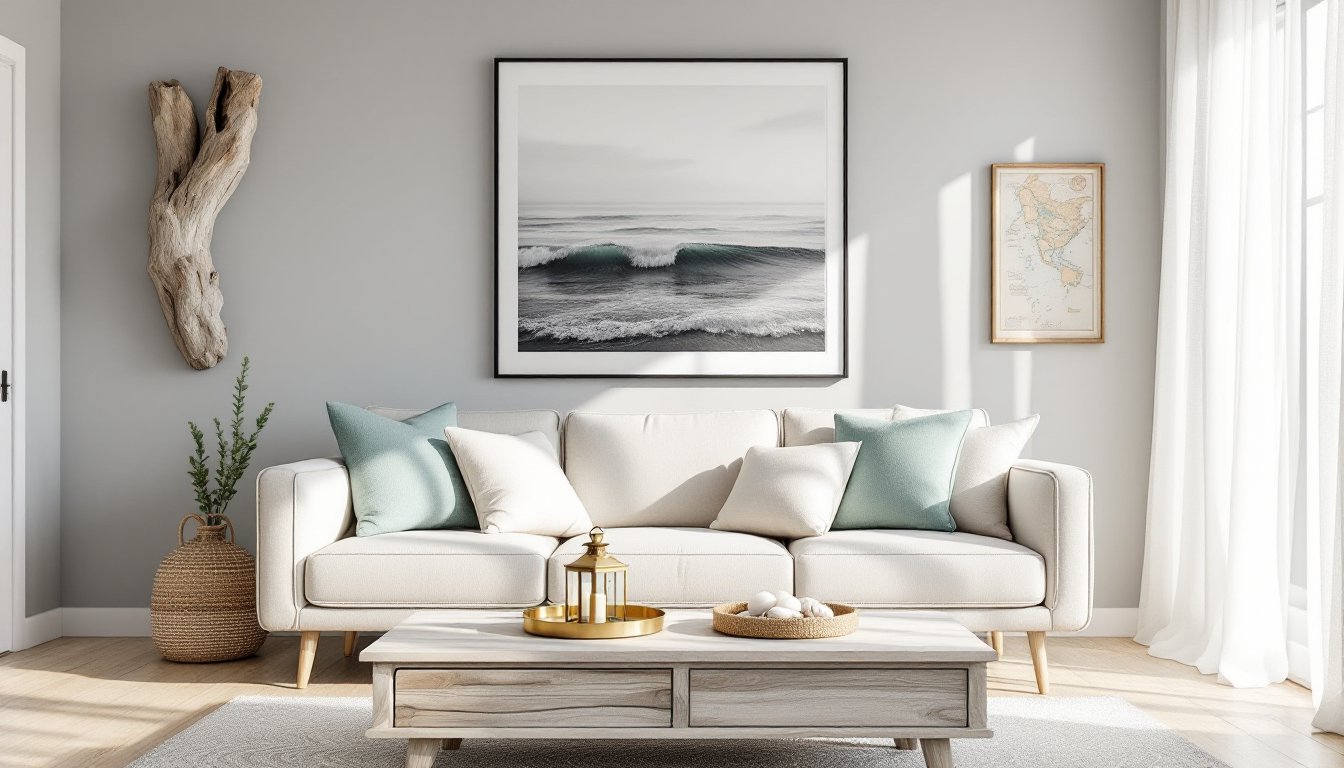
Bringing the calm and tranquility of the coast into a living room doesn’t require a waterfront property, just the right wall decor. Beach-themed wall art transforms ordinary spaces into serene retreats that echo the rhythm of waves and sand. Whether someone’s drawn to weathered driftwood, vintage nautical maps, or minimalist ocean photography, coastal wall decor offers endless options for creating a relaxing atmosphere. This guide walks through proven design strategies, style breakdowns, and practical installation tips to help homeowners nail that breezy, coastal vibe without turning their living room into a theme park.
Beach wall decor works because it taps into universal associations with relaxation, openness, and natural beauty. Coastal colors, soft blues, sandy neutrals, weathered grays, and crisp whites, create visual calm and make rooms feel larger and more airy. Unlike bolder design schemes, beach themes rely on light reflection and organic textures, which naturally soften hard architectural lines.
From a design standpoint, beach decor offers unusual flexibility. It pairs well with modern minimalism, rustic farmhouse aesthetics, and even mid-century furniture. The key is in the execution: too many seashells and anchor motifs can veer into kitsch, while carefully curated pieces, a single oversized wave photograph, a sculptural piece of driftwood, or a vintage oar mounted horizontally, add character without overwhelming the space.
Psychologically, coastal imagery has measurable effects on mood. Studies on environmental psychology suggest that blue tones and natural imagery reduce stress and promote feelings of tranquility. For living rooms, spaces meant for unwinding and gathering, that emotional response makes beach themes particularly effective. The textures matter too: woven jute, reclaimed wood, sea glass, and linen all introduce tactile variety that keeps coastal rooms from feeling flat or one-note.
Practically speaking, beach wall decor also addresses common design challenges. It brightens north-facing rooms that lack natural light, adds warmth to spaces with cool-toned flooring, and provides a cohesive thread for open-concept layouts where the living room flows into dining or kitchen areas.
Not all beach decor looks the same. Understanding the major style categories helps homeowners choose pieces that align with their existing furnishings and personal taste.
This approach strips beach themes down to their essentials: clean lines, monochromatic or limited palettes, and abstract interpretations of coastal elements. Think large-scale black-and-white ocean photography, single-piece driftwood sculptures mounted on crisp white walls, or simple line drawings of waves and shorelines.
Coastal minimalism works best in contemporary or Scandinavian-style living rooms where clutter is already minimal. Frame choices matter, thin black metal frames or frameless gallery-mounted prints maintain the streamlined aesthetic. Avoid mixing too many materials in this style: stick to one or two textures like bleached wood and matte canvas to keep the look cohesive.
Installation tip: Use French cleats for heavier driftwood or dimensional pieces rather than standard picture hangers. They distribute weight evenly across wall studs and allow for easy leveling adjustments.
Nautical decor leans into seafaring history: vintage ship wheels, brass compasses, antique maps, rope accents, and signal flag art. This style has more visual weight and works particularly well in traditional or transitional living rooms with established wood tones and layered furnishings.
The trick with nautical themes is restraint. One statement piece, a large vintage harbor chart in a wooden frame, or a reclaimed ship’s porthole mirror, anchors the room without making it feel like a maritime museum. Pair it with subtler supporting elements: rope-wrapped picture frames, navy and cream striped textiles, or hurricane lantern sconces.
Materials to look for: Teak, mahogany, and other hardwoods used in boatbuilding: brass and bronze hardware that develops natural patina: authentic nautical charts (NOAA charts work great and are inexpensive): vintage canvas or sailcloth.
Installation consideration: Authentic maritime pieces can be heavy. Always locate wall studs (typically 16 inches on center in modern construction) when mounting large framed charts or dimensional items like oars or boat cleats. A stud finder costs under $20 and prevents drywall repairs down the line.
Selecting beach wall decor isn’t just about personal preference, it requires measuring, planning, and understanding how scale and placement affect a room’s balance.
Start with wall measurements. The most common mistake is choosing art that’s too small. For a standard sofa (84–96 inches wide), wall art should span roughly two-thirds to three-quarters of that width. That means a single piece should be around 60–70 inches wide, or a gallery arrangement should fill that footprint. Measure twice before buying: what looks substantial in a store often shrinks on a large living room wall.
Consider ceiling height. Standard 8-foot ceilings call for vertically oriented pieces or horizontal arrangements that don’t exceed 36–40 inches in height when hung at proper eye level (center of the artwork at 57–60 inches from the floor). Rooms with 9- or 10-foot ceilings can handle larger statement pieces or vertical triptychs that draw the eye upward.
Match the mood to the room’s function. Living rooms used primarily for entertaining benefit from bold, conversational pieces, a dramatic seascape with crashing waves, a large-scale abstract in coastal blues and greens, or a collection of vintage surfboards mounted in a geometric pattern. If the space is mainly for quiet family time, softer imagery works better: serene beach horizons, misty coastal fog, or subtle sand textures.
Account for existing color schemes. Beach decor doesn’t require repainting the entire room, but it should complement what’s already there. Rooms with warm neutrals (beiges, taupes, soft grays) pair well with warmer coastal tones, sandy beiges, coral accents, sun-bleached wood. Cool-toned rooms (grays with blue or green undertones) handle classic coastal blues, seafoam greens, and crisp whites.
Lighting affects perception. Natural light changes throughout the day, and artificial lighting adds another variable. Glossy or glass-covered prints can create glare in rooms with large west-facing windows. Matte finishes, canvas wraps, and textured pieces (woven fiber art, carved wood panels) handle varied lighting conditions better. If the living room relies heavily on artificial light, consider adding picture lights or adjustable track lighting to highlight key pieces without washing them out.
Ready-made prints are fine, but custom or unexpected approaches create truly unique spaces. Here are ideas that go beyond the standard framed seascape:
Driftwood installations: Large pieces of driftwood, especially those with interesting curves or naturally weathered surfaces, make dramatic wall-mounted sculptures. Secure them with heavy-duty lag screws drilled directly into studs. For smaller pieces, create a geometric arrangement on a backing board (1/2-inch plywood works well), then mount the entire assembly as one unit.
Vintage nautical chart murals: Large-format nautical charts can be professionally printed as removable wall murals or traditional wallpaper. They work especially well as accent walls behind sofas or entertainment centers. Make sure to prep walls properly, fill any holes with spackle, sand smooth, and prime if needed. Poor surface prep telegraphs through wallpaper.
Shadow boxes with found objects: Collect shells, sea glass, sand dollars, or small pieces of coral and arrange them in deep shadow box frames (2–4 inches deep). Use museum putty or small dabs of clear adhesive to secure items without visible hardware. Group multiple shadow boxes in a grid for impact.
Rope and net accents: Authentic fishing nets (available at marine supply stores) can be draped as textural backdrops for other wall art, or used to create dimensional displays with attached shells, starfish, or small driftwood pieces. Secure nets at multiple points using small cup hooks or eye screws into wall anchors.
Reclaimed wood plank art: Create custom coastal art by painting or staining reclaimed fence boards or pallet wood in gradated blues (darkest at bottom, lightest at top to mimic ocean depth). Arrange horizontally and mount on a backing board. Sand edges for a weathered look, and seal with matte polyurethane to protect against dust and moisture.
Surfboard or paddle displays: Real vintage surfboards or decorative paddles add three-dimensional interest. Mount horizontally using surfboard wall racks (typically two brackets spaced 24–36 inches apart, depending on board length). Always anchor into studs, surfboards can weigh 15–25 pounds.
Gallery walls with mixed media: Combine framed prints, small mirrors with rope or driftwood frames, dimensional sea fans or coral specimens, and vintage beach photography in varying frame styles. Start by arranging pieces on the floor to find a balanced layout, then transfer measurements to the wall using painter’s tape as guides before hammering a single nail.
Safety note: When working with found beach materials (driftwood, shells, coral), clean thoroughly with diluted bleach solution and allow to dry completely before bringing indoors. This prevents mold, eliminates salt residue, and removes any lingering organic matter.
Beach wall decor transforms living rooms into coastal retreats when executed with intention and restraint. The difference between a thoughtful coastal space and a souvenir-shop aesthetic comes down to scale, quality, and curation. Measure walls, anchor heavy pieces properly, and choose items that genuinely resonate rather than checking boxes. Whether it’s a single statement piece or a curated gallery wall, the goal is creating a space that feels like a deep breath, not a decorating trend.